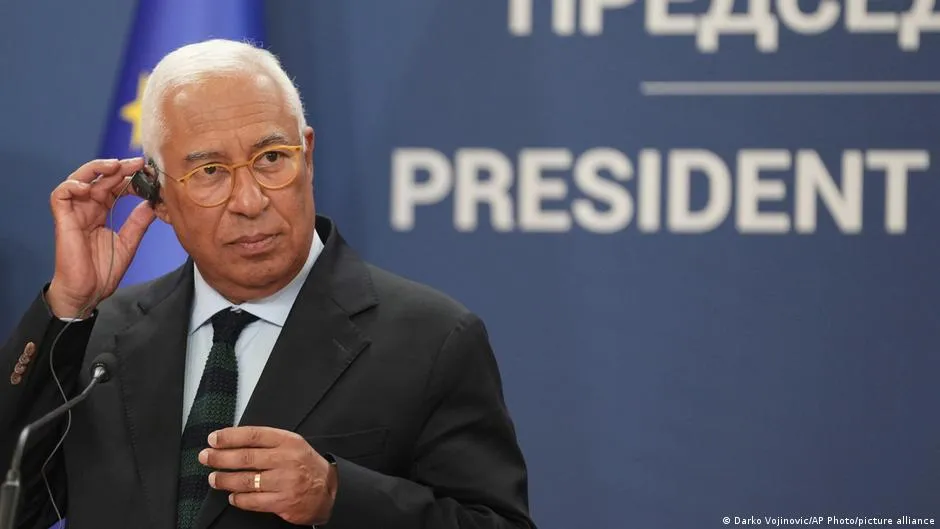
If patience were an Olympic sport, the Western Balkans would have a trophy cabinet bigger than Michael Phelps's. Countries like Serbia, Albania, North Macedonia, and Montenegro have been knocking on the EU's front door since the early 2000s, and Brussels has been politely saying 'just a moment' ever since. But according to Deutsche Welle, European Council President Antonio Costa now wants to actually do something about that.
A summit, a statement, and (maybe) some action
Costa made his comments ahead of an upcoming EU-Western Balkans summit in Montenegro - which is, fittingly, one of the countries still waiting in the membership queue. His position is clear: new methods need to be found to accelerate the accession process for the region. This is not just diplomatic small talk. The EU has been under mounting pressure to show that enlargement is more than a PowerPoint ambition.
The Western Balkans includes six territories - Albania, Bosnia and Herzegovina, Kosovo, Montenegro, North Macedonia, and Serbia - all of which have been formally recognized as potential EU members for years. Montenegro and Serbia are the furthest along in formal negotiations, but even they remain far from the finish line.
Why the sudden urgency?
Geopolitics, mostly. Russia's invasion of Ukraine reshuffled the EU's entire enlargement deck. Suddenly, having a stable, EU-integrated Western Balkans looked less like a bureaucratic checkbox and more like an actual strategic necessity. The bloc has since accelerated talks with Ukraine and Moldova, which has left some Balkan leaders understandably asking: 'What about us?'
There is also the small matter of China and Russia actively courting influence in the region. Serbia, for instance, has maintained notably warm ties with Moscow despite EU pressure to align with Western sanctions policy. The longer accession drags on, the more room there is for other players to fill the vacuum.
New ways, old problems
The challenge, as always, is that EU membership is not a participation trophy. Candidate countries must align with EU law, tackle corruption, reform their judiciaries, and meet a mountain of other benchmarks. Some of these countries have struggled with rule-of-law reforms - a sticking point that Brussels takes very seriously, at least on paper.
Whether Costa's call for new approaches translates into actual procedural changes or just nicer-sounding timelines remains to be seen. The Montenegro summit will be an early test of whether this is a real gear shift or just the EU's traditional method of announcing urgency and then moving at the speed of a particularly cautious glacier.
Either way, the Western Balkans will be watching closely - as they have been, arguably, since before some of their younger diplomats were born.