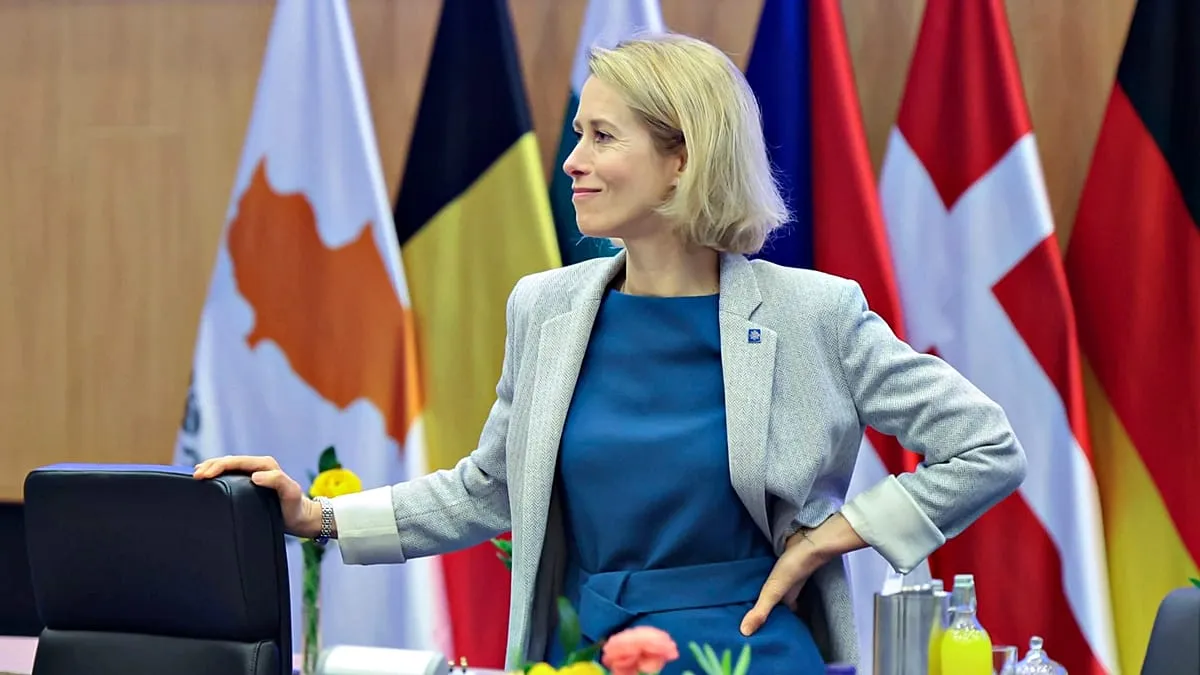
Europe's top diplomat is doing some serious reassurance work this week, telling anyone who will listen that the EU's mutual assistance clause and NATO's collective defence are not, in fact, sworn enemies fighting for control of the same security blanket.
EU High Representative Kaja Kallas told Euronews that the two frameworks are "complementary to each other" - a message clearly aimed at calming nerves on both sides of the Atlantic as Donald Trump continues his tradition of publicly threatening to leave NATO like a drama student storming out of rehearsal.
So what exactly is this EU clause?
Article 42.7 of the EU Treaty - the bloc's mutual assistance clause - essentially says that if one EU member state gets attacked, the others are obliged to help out. Sound familiar? It should. NATO's Article 5 does roughly the same thing, just with a bigger guest list that includes the United States and Canada.
The key difference, and the source of much hand-wringing in Brussels and Washington alike, is that the EU clause exists entirely outside the NATO framework. That raises an awkward question: if Europe builds up its own defence commitments, does that make the US-led alliance redundant - or worse, does it give Trump the excuse he's been looking for to finally ghost the whole organisation?
Kallas, for her part, is firmly in the "no, relax" camp. According to her interview with Euronews, the two mechanisms operate on different tracks and are designed to reinforce, not replace, each other.
Trump's NATO theatrics: a brief history
This is not the first time European officials have had to scramble to address Trump's relationship with NATO, which has historically resembled a grumpy landlord who hates his tenants but keeps cashing the rent cheques. Throughout his political career, Trump has repeatedly suggested that NATO allies who don't hit their defence spending targets shouldn't expect US protection - a position that has sent European capitals into various states of strategic panic.
The renewed pressure has accelerated EU discussions around defence autonomy, with European leaders increasingly acknowledging that depending almost entirely on Washington for security is, in hindsight, a bit of a gamble.
The bottom line
Kallas's message is essentially this: Europe getting its act together on defence doesn't mean it's breaking up with NATO. It just means the EU is finally doing its homework instead of copying off America's answers.
Whether that argument lands in Washington is, of course, a completely different story.
Source: Euronews