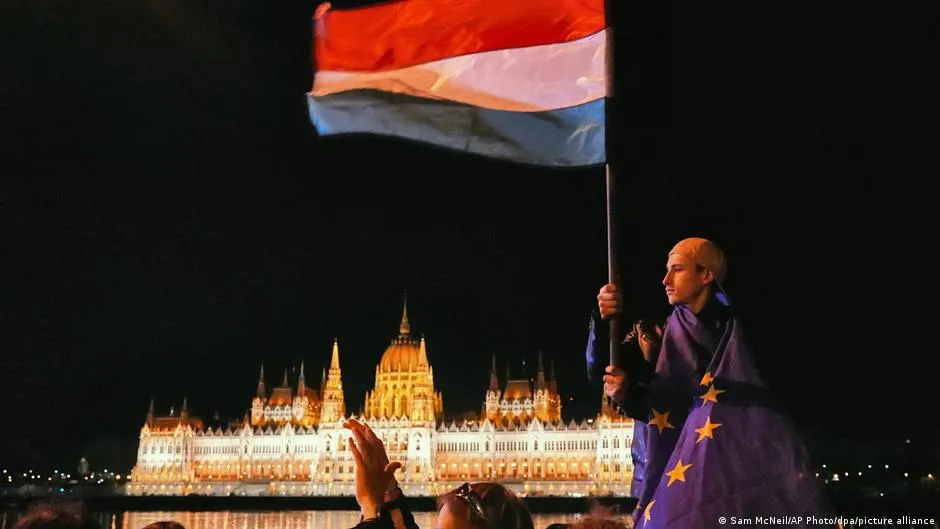
European Union officials have responded with cautious optimism after Hungary's opposition unseated Viktor Orban, ending his 16-year grip on power in a result that Brussels hopes will resolve long-running tensions with Budapest, according to reporting by Deutsche Welle.
Orban's government had repeatedly clashed with EU institutions over issues including rule of law, press freedom, migration policy, and Hungary's posture toward Russia following the invasion of Ukraine. Budapest's frequent use of its veto power on EU decisions had frustrated bloc-wide efforts on multiple fronts.
Who is Peter Magyar?
Peter Magyar, the opposition leader who led the challenge against Orban, has emerged as the central figure in what EU officials hope will mark a significant shift in Hungary's relationship with the bloc. Magyar had campaigned on a platform broadly aligned with European democratic norms, signaling a potential departure from the nationalist, sovereignty-first approach that defined the Orban years.
Brussels officials have been watching the transition closely, with expectations that the new government could lift Hungary's objections on key EU measures that had been stalled in part due to Budapest's opposition.
What the EU is expecting
Among the issues EU institutions are hoping a Magyar-led government will address are Hungary's frozen structural funds, which Brussels had withheld over rule-of-law concerns. Re-engagement on Ukraine aid and security commitments are also high on the agenda, as is potential movement on judicial independence reforms that had been a persistent sticking point between Budapest and Brussels.
While the mood in EU capitals has been described as broadly positive, officials have stopped short of declaring the disputes resolved, reflecting awareness that governing is more complex than campaigning and that Magyar will face significant domestic pressures.
End of a divisive chapter
Orban had been one of the EU's most polarizing figures, cultivating alliances with far-right and nationalist parties across Europe while positioning Hungary as a defender of what he described as Christian and national values against what he characterized as Brussels overreach.
His departure from power represents one of the most consequential political shifts within the EU in recent years, removing a leader who had at times acted in concert with other governments - most notably in opposing certain sanctions against Russia - to block or delay bloc-wide consensus.
Whether Magyar will move quickly to repair relations or face constraints from domestic politics remains to be seen, but the initial signals from Brussels suggest a strong institutional appetite for a reset with Budapest.