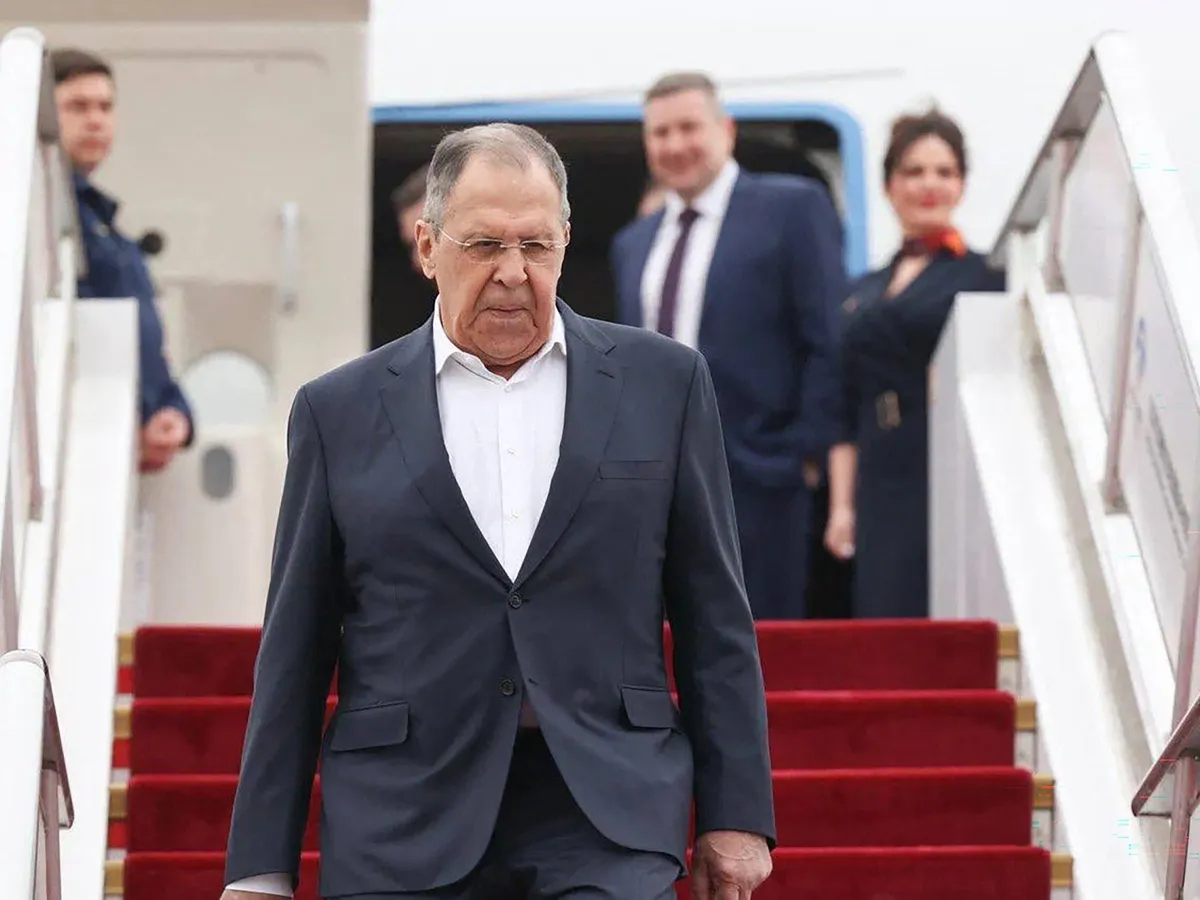
Russian Foreign Minister Sergei Lavrov has traveled to Beijing for high-level talks with Chinese officials, as the United States intensifies pressure on Iran through what reports describe as a blockade of the Strait of Hormuz, according to Al Jazeera.
The visit underscores deepening coordination between Moscow and Beijing at a moment of acute regional tension. Both governments have positioned themselves as critics of the US-Israel military campaign against Iran, a country that maintains close ties with both world powers.
Strategic alignment on display
The meeting between Lavrov and his Chinese counterparts signals that Russia and China are seeking to present a unified diplomatic front in response to the conflict. Iran has long served as a key partner for both nations - economically, strategically, and politically - giving Moscow and Beijing a shared interest in the outcome of the current confrontation.
The Strait of Hormuz, a narrow waterway between Iran and Oman, is one of the world's most critical maritime chokepoints. Roughly a fifth of global oil trade passes through the strait, meaning any sustained blockade there would carry significant consequences for energy markets worldwide.
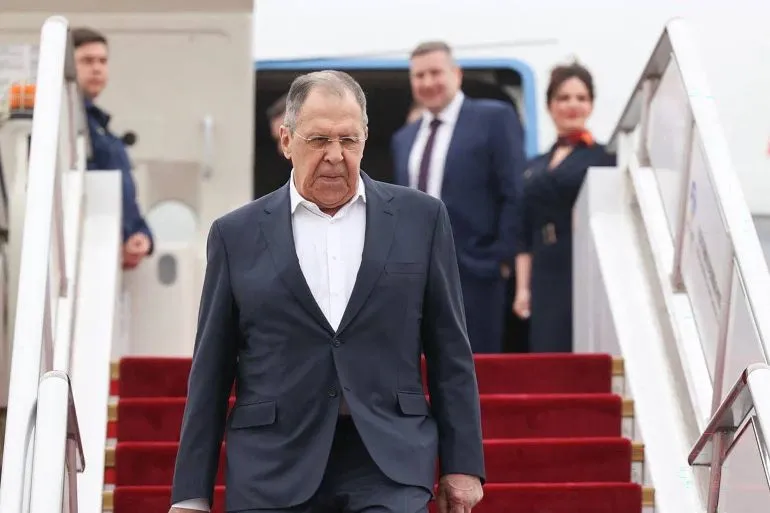
Diplomatic pressure mounts
The Lavrov visit comes as international diplomatic activity surrounding the Iran conflict accelerates. The United States and Israel have faced sharp criticism from a number of governments over the military campaign against Iran, with Russia and China among the most prominent voices opposing the operation.
Al Jazeera's reporting did not provide specific details on the outcomes or formal agreements reached during Lavrov's meetings in Beijing. The full scope of what was discussed between the Russian and Chinese sides had not been disclosed at the time of publication.
The situation represents a significant test of the broader geopolitical alignments that have solidified in recent years. Russia and China have repeatedly framed their partnership as a counterweight to what they describe as Western-led unilateralism in international affairs, and the Iran conflict appears to be reinforcing that narrative in both capitals.
Analysts have noted that a prolonged military confrontation involving Iran - and a blockade of a waterway so central to global energy flows - could accelerate efforts by Moscow and Beijing to deepen economic and security ties with Tehran, further complicating diplomatic efforts to de-escalate the conflict.