
In news that is equal parts paleontology, geopolitics, and cosmic irony, Germany has agreed to return a rare dinosaur skull to Brazil - a skull belonging to a genus called Irritator challengeri. And yes, the name is extremely appropriate given the circumstances.
According to a report by The Guardian, Stuttgart's State Museum of Natural History purchased the fossilised skull back in 1991. What they got turned out to be far more significant than your average rocky souvenir: researchers eventually confirmed it was the most complete spinosaurid skull ever discovered, belonging to a previously unknown genus of giant meat-eating dinosaurs that roamed what is now northeastern Brazil roughly 113 million years ago.
So why is it called Irritator?
Here is where the story gets delightfully nerdy. The genus was named Irritator partly because the specimen had been heavily and badly altered by fossil dealers before its sale - modifications that irritated the scientists studying it to no end. The species name, challengeri, is a nod to Arthur Conan Doyle's fictional Professor Challenger from The Lost World. Science has a sense of humor, apparently.

A long road home
Brazil has been campaigning for the skull's restitution for years. The fossil is widely believed to have been illegally excavated and exported from Brazil, where fossils are protected under national law and cannot be privately owned or exported without authorization. The Stuttgart museum's 1991 purchase placed it at the center of a restitution debate that has only grown louder as international momentum behind returning culturally and scientifically significant specimens to their countries of origin has increased.
The case echoes broader global conversations about the provenance of natural history collections, many of which were assembled during eras when legal and ethical standards around acquisition were... let's say, more relaxed.
What happens next?
The skull is set to be returned to Brazil, where it is expected to become a centerpiece of the country's natural history collections. For Brazilian paleontologists, this is a significant win - not just symbolically, but scientifically, as having the specimen accessible in its country of origin opens new avenues for research and public education.
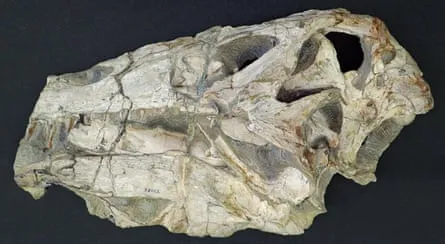
For Irritator itself, the 113-million-year journey from predator of a Cretaceous floodplain, to black market fossil trade, to European museum shelf, to restitution headline is arguably the most eventful post-mortem career in dinosaur history.
Germany, to its credit, is doing the right thing. Even if it took a few decades - and one very aptly named dinosaur - to get there.
Source: The Guardian