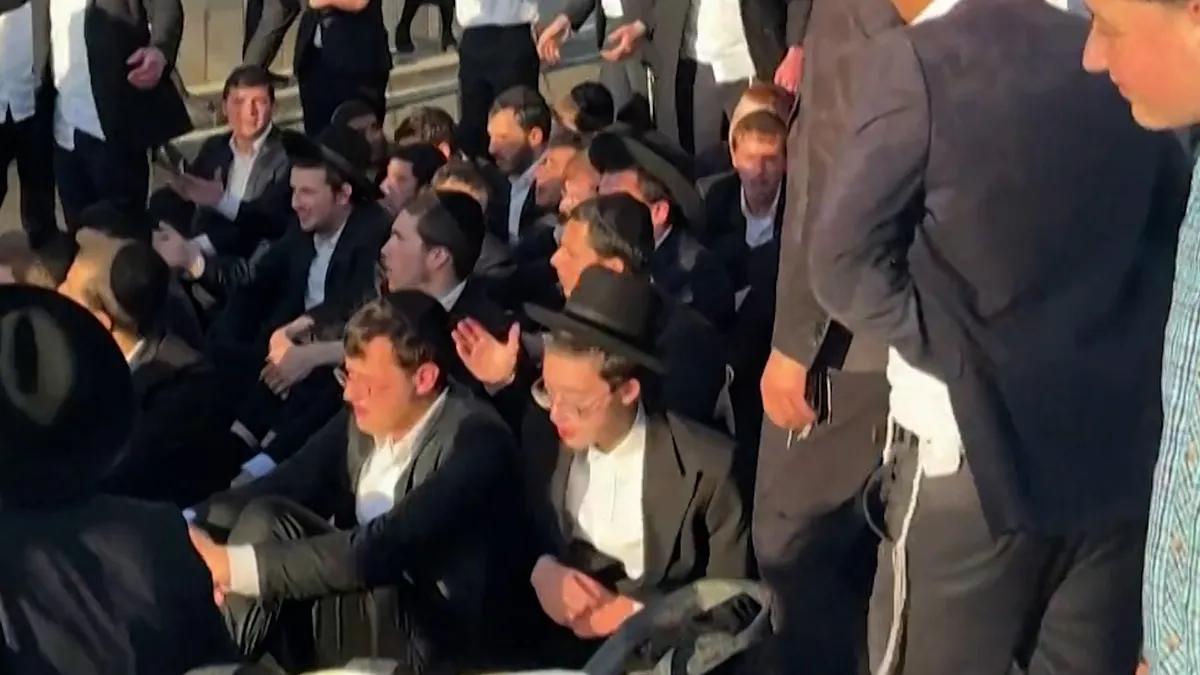
Hundreds of ultra-Orthodox Jews took to the streets in Israel, blocking a main road as part of ongoing protests against the country's mandatory military conscription policy, according to footage and reporting from Al Jazeera.
The demonstration is the latest flashpoint in a long-running dispute between Israel's Haredi ultra-Orthodox community and the state over whether religious seminary students should be required to serve in the Israel Defense Forces (IDF).

A deeply rooted controversy
Israel maintains one of the world's most extensive mandatory military service systems, requiring most Jewish citizens to serve in the IDF after reaching adulthood. Historically, ultra-Orthodox men who devoted themselves to full-time religious study were granted exemptions from this requirement - an arrangement that dates back to the founding of the state.
That exemption has grown increasingly contentious, particularly as Israel's Haredi population has expanded significantly in recent decades. Critics of the exemption, including many secular and moderately religious Israelis, argue that the policy places a disproportionate burden on the rest of the population, especially during periods of active military conflict.
The Israeli Supreme Court ruled in 2024 that the state had no legal basis to continue exempting ultra-Orthodox men from conscription and to fund yeshiva students who refused to serve. The ruling intensified pressure on the government to bring the Haredi community under the same legal framework as other citizens.
Community opposition remains firm
Ultra-Orthodox leaders and community members have consistently rejected military service on religious grounds, arguing that the continuation of Torah study is of paramount importance and that army life is incompatible with their way of living.
Protests against the draft have occurred repeatedly across Israel, with demonstrators at times blocking major thoroughfares and clashing with police. The demonstrations reflect the depth of feeling within Haredi communities, where conscription is widely viewed as a direct threat to their religious identity and way of life.
The issue has also carried significant political weight. Ultra-Orthodox political parties have historically played a pivotal role in Israeli coalition governments, giving the community leverage over legislation related to military exemptions. The current government, led by Prime Minister Benjamin Netanyahu, relies in part on Haredi party support to maintain its parliamentary majority.
Broader social tensions
The draft dispute intersects with wider tensions in Israeli society over the role of religion in public life, resource allocation, and shared civic responsibility - debates that have intensified amid the ongoing conflict in Gaza and the sustained demand placed on IDF personnel and reservists.
No immediate resolution to the standoff appears imminent, as both government officials and Haredi community leaders have shown little indication of willingness to compromise on their core positions.