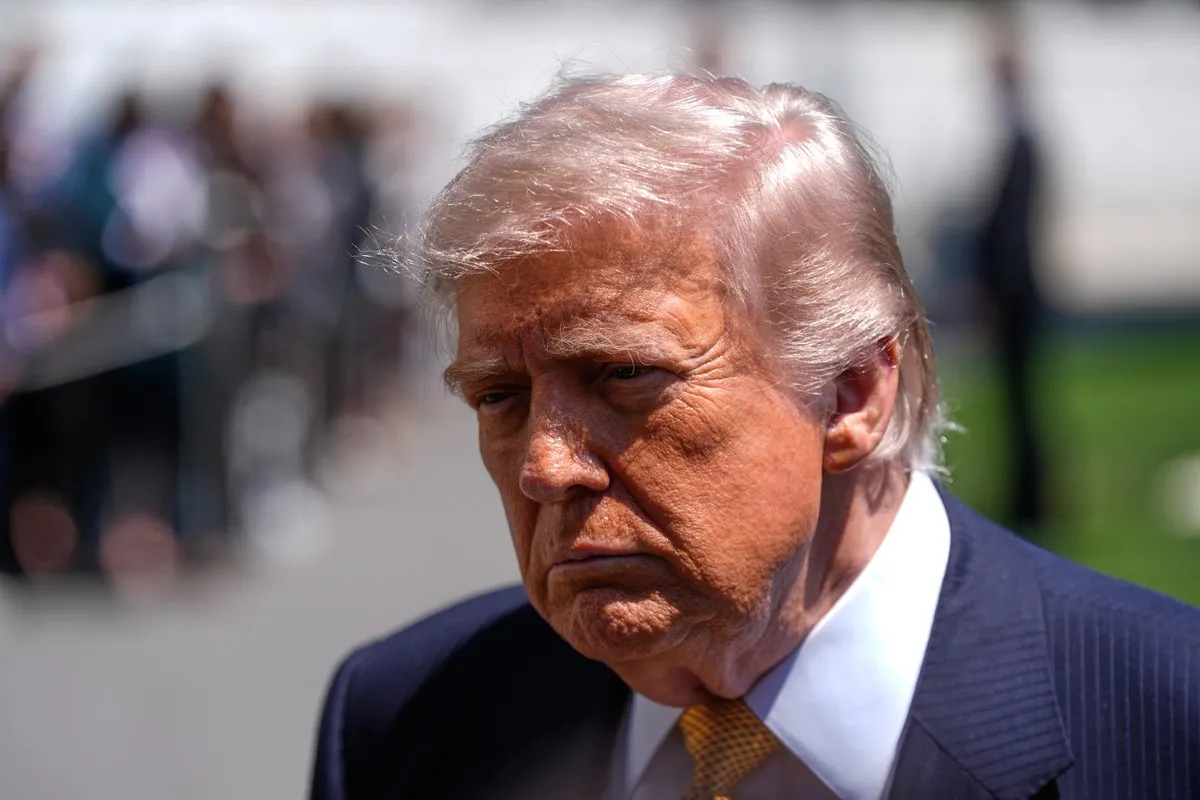
Former President Donald Trump has again declined to rule out deploying military troops or Immigration and Customs Enforcement (ICE) agents at polling stations during future elections, telling interviewers he would do "anything necessary" to protect what he describes as election integrity.
The remarks, reported by The Independent, represent a continuation of Trump's repeated refusal to commit to conventional electoral norms. When pressed on whether federal law enforcement or military personnel could be stationed at voting locations, Trump did not exclude the possibility.
Trump has continued to assert, without evidence, that his 2020 presidential election loss to Joe Biden was the result of widespread fraud - a claim that has been rejected by courts across the United States, state election officials from both parties, and his own former attorney general, William Barr. More than 60 legal challenges filed by Trump's allies following the 2020 election were dismissed or rejected by judges, including those appointed by Trump himself.
Pattern of unsubstantiated claims
According to The Independent, Trump has repeatedly suggested that electoral defeats for Republicans can only occur through Democratic misconduct - a framing that critics argue is designed to preemptively delegitimize unfavorable results. Election security experts and nonpartisan observers have consistently found no evidence of the kind of systematic fraud Trump alleges.
The prospect of armed federal agents or military personnel at polling stations raises significant legal and constitutional questions. The Posse Comitatus Act generally restricts the use of federal military forces in domestic law enforcement. Deploying immigration agents at voting locations could also raise concerns under the Voting Rights Act, which prohibits intimidation of voters.
Context ahead of future elections
Trump's comments come as he remains the dominant figure in the Republican Party and a leading candidate in the 2024 presidential race. His statements on election administration have drawn scrutiny from election law experts, civil liberties organizations, and members of both parties.
Voting rights advocates have warned that the presence of armed federal agents near polling stations could have a chilling effect on voter turnout, particularly among immigrant communities and voters of color. The American Civil Liberties Union and other organizations have previously mounted legal challenges to perceived voter intimidation tactics.
The White House and Democratic Party officials have not yet responded publicly to Trump's latest remarks, according to The Independent's report. No formal policy proposal or executive order related to polling station security has been introduced by Trump or his campaign at this stage.