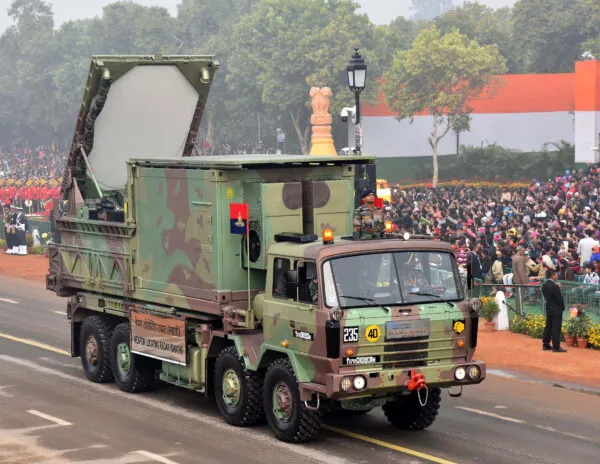
If the wars in Ukraine and Gaza have taught military planners anything, it is that artillery is still king on the modern battlefield. Rockets, drones, and stealth jets get all the glory, but it is the unglamorous howitzer that does the real killing. So it is, shall we say, a little awkward that India - the world's largest army by personnel - does not have nearly enough of them.
According to a report published by The Diplomat, the Indian Army currently fields around 226 field artillery regiments. That sounds like a big number until you consider the sheer scale of the borders India has to defend - a hostile nuclear-armed Pakistan to the west and an increasingly assertive China to the north and east. Military planners have concluded that 270 regiments is the minimum needed to adequately cover those fronts, leaving a gap of roughly 44 regiments.
Why artillery matters so much right now
The wars of the 2020s have been a brutal reminder that whoever runs out of shells first tends to lose. In Ukraine, both sides have burned through artillery ammunition at rates that stunned Western analysts, and the side with more guns and more rounds has consistently dictated the tempo of the conflict. India's military brass has clearly been watching closely.
The shortfall is not just about raw numbers of tubes, either. Modernization is a parallel headache. Much of India's artillery inventory still relies on older platforms, and integrating newer systems - including domestically produced options under the government's push for self-reliance in defense manufacturing - takes time, money, and serious logistical effort.
A two-front problem
India's strategic situation is uniquely complicated. Unlike most countries that plan primarily for one threat axis, Indian military planners must account for the possibility of simultaneous pressure from both Pakistan and China. The 2020 Galwan Valley clash with Chinese troops underlined just how quickly a border standoff can escalate, and high-altitude artillery operations in the Himalayas present challenges that flat-terrain equipment simply cannot handle.
Filling the gap to 270 regiments will require not just procurement, but the right kind of procurement - systems that can operate in extreme cold, at altitude, and over the kinds of terrain that would make most logistics officers quietly weep.
India has been ramping up defense spending and pushing domestic production through initiatives like "Make in India," but closing a 44-regiment shortfall is not something that happens overnight. Until then, the Indian Army's artillery arm remains, by its own planning standards, under-strength for the fights it might one day be asked to fight.
Source: The Diplomat