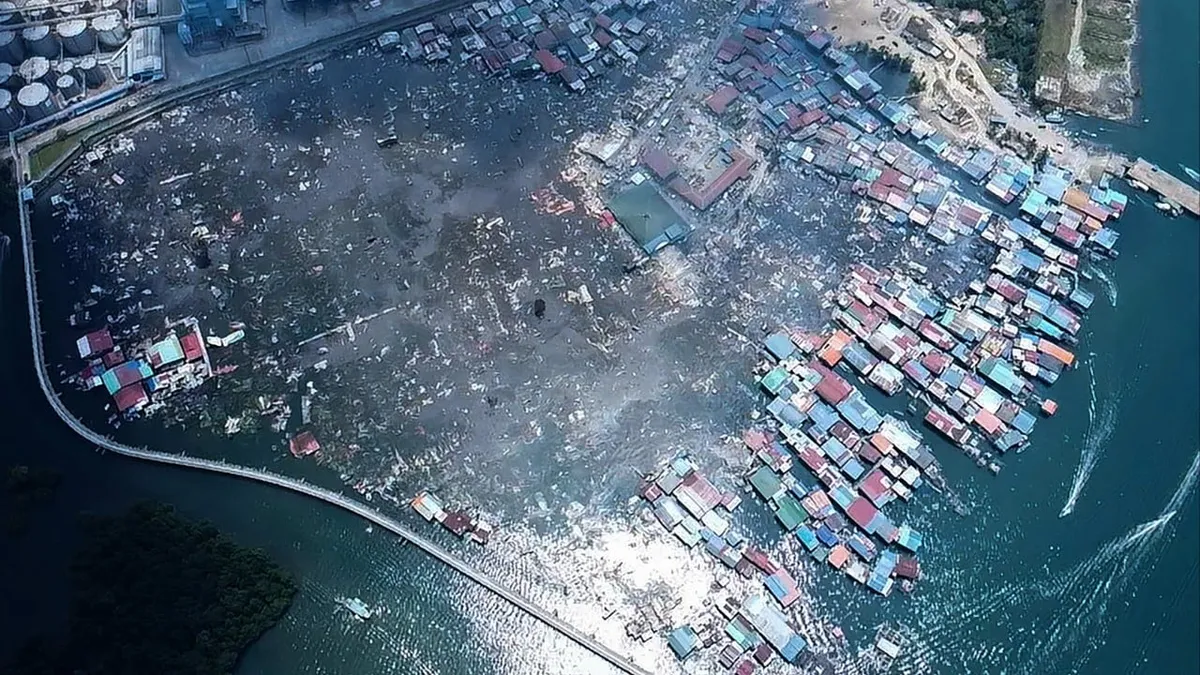
If you ever needed a reminder that Mother Nature does not negotiate, here it is. A devastating fire tore through a coastal village in Sandakan district, Sabah - on the Malaysian side of Borneo island - in the early hours of Sunday, destroying approximately 1,000 homes and displacing more than 9,000 residents in what can only be described as a catastrophic night for the community.
How it happened
According to the South China Morning Post, fire and rescue authorities were first alerted at around 1:32am. By that point, the blaze was already well on its way to becoming a full-blown disaster. Jimmy Lagung, the district's fire and rescue chief, explained in an official statement that three factors combined to create a near-impossible firefighting scenario.
First, strong winds pushed the flames aggressively from structure to structure. Second, the houses in the area were built in very close proximity to each other - a common feature of coastal stilt villages in this part of Malaysia - meaning the fire had essentially a pre-built highway to travel along. Third, and perhaps most cruelly, low tide conditions severely limited access to open water sources, hamstringing firefighters at the worst possible moment.
The human cost
More than 9,000 people have been displaced as a result of the fire, according to the fire department. Losing your home is bad enough - losing it at 1:30 in the morning, with next to no warning, is something else entirely. Thousands of residents were left scrambling in the dark as the fire advanced through the densely packed neighborhood.
Sandakan district is located on the northeast coast of Sabah and is one of the state's larger urban centers. Coastal stilt communities, while culturally significant and common across the region, are particularly vulnerable to fast-moving fires due to their construction style and density.
What comes next
As of the time of reporting, no official casualty figures had been confirmed, and relief and emergency response operations were underway. The scale of the destruction - roughly 1,000 homes - makes this one of the more significant fire disasters the region has seen in recent memory.
Authorities have not yet confirmed the official cause of the blaze. What is clear, based on statements from fire officials cited by the South China Morning Post, is that once the fire started, the conditions on the ground made stopping it extraordinarily difficult.
For a community waking up on Sunday morning to find an entire neighborhood reduced to rubble, the road to recovery is going to be a long one.