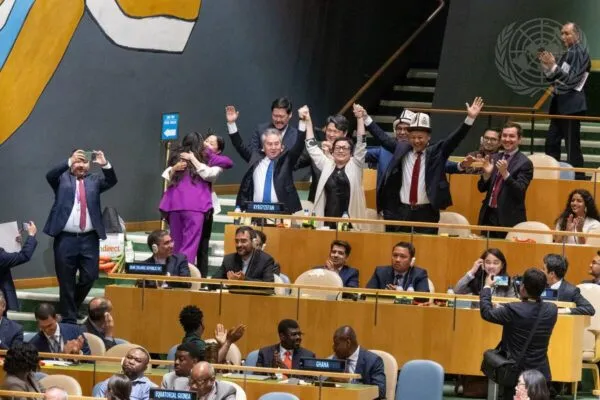
Move over, great powers - Kyrgyzstan has entered the chat. The Central Asian republic has been elected as a non-permanent member of the United Nations Security Council for the very first time in its history, according to The Diplomat. Yes, that Security Council - the one with the veto-wielding permanent members who spend most of their time glaring at each other across a very expensive table.
How did this happen?
Kyrgyzstan did not muscle its way into the room. It rode a wave of diplomatic goodwill from its regional neighbors, Turkiye, and a broad coalition of Muslim-majority states that backed its candidacy. The result is a genuinely historic moment: Kyrgyzstan becomes only the second Central Asian country ever to earn a seat as a non-permanent UNSC member.
For a country of roughly 7 million people nestled between Kazakhstan, China, Tajikistan, and Uzbekistan - and not exactly known for throwing its geopolitical weight around - this is a pretty big deal. Think of it as the geopolitical equivalent of the underdog team making it to the championship by getting every single person in the stands to vote for them.
Why does it matter?
Non-permanent members of the Security Council serve two-year terms and, while they lack the veto power enjoyed by the P5 (the US, UK, France, Russia, and China), they still get a seat at the table where some of the world's most consequential decisions are made - from peacekeeping missions to sanctions regimes.
Kyrgyzstan's election signals something broader: a growing appetite among smaller nations and regional blocs to assert themselves in global governance structures that have historically been dominated by a handful of powerful states. Central Asia, long treated as something of a geopolitical footnote, is increasingly showing up in conversations that matter.
The diplomatic math
The win was not accidental. Building the kind of coalition that propels a small nation onto the Security Council requires years of relationship-building, favor-trading, and careful alignment with blocs that carry significant voting weight. Turkiye's backing, combined with support from Muslim-majority states, provided exactly the critical mass Kyrgyzstan needed to pull this off.
Whether Kyrgyzstan will use its new platform to punch above its weight on global issues - or mostly try not to spill anything on the fancy Security Council furniture - remains to be seen. But for now, history has been made, and Bishkek is absolutely allowed to enjoy it.