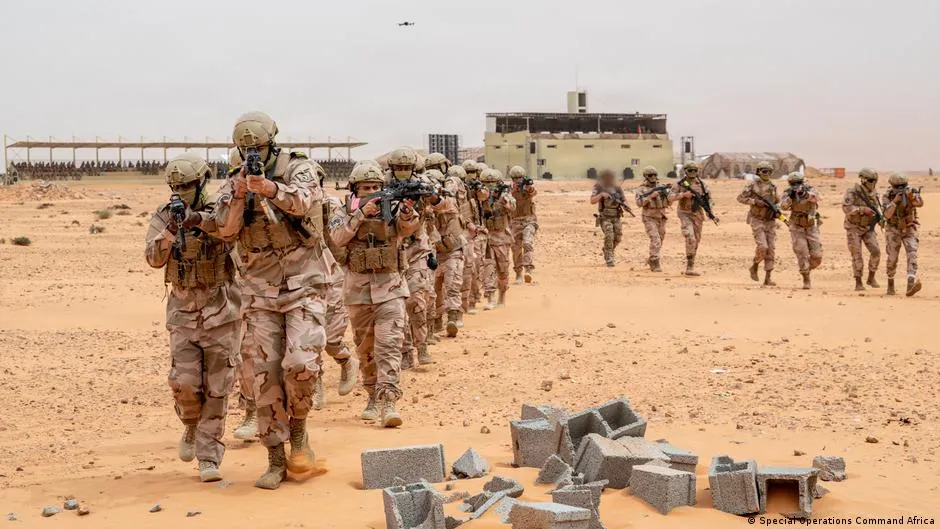
For the first time, military representatives from both of Libya's competing political factions have participated together in Flintlock, a multinational military exercise led by the United States, according to a report by Deutsche Welle. The development is being watched closely by analysts as a potential indicator of progress toward reunifying a country that has been divided for years.
Libya has remained split between two rival administrations since the aftermath of the 2011 uprising that toppled longtime leader Muammar Gaddafi. A UN-backed government operates out of Tripoli in the west, while a separate administration aligned with military commander Khalifa Haftar controls much of the east. Repeated peace efforts over the past decade have produced limited lasting results.
What Flintlock represents
Flintlock is an annual special operations exercise conducted across Africa, designed to strengthen regional security partnerships and build interoperability among participating forces. The inclusion of representatives from both sides of Libya's divide marks a notable departure from previous editions of the exercise.
According to DW's reporting, the participation has been characterized by some observers as a tentative sign of hope, though significant skepticism remains about whether joint military exercises can translate into meaningful political reconciliation on the ground.
A country still deeply divided
The gap between symbolic cooperation and functional unity remains wide. Libya's division is not merely political - it reflects deep regional, tribal, and economic fault lines, as well as competing foreign interests. Countries including Turkey, Russia, the United Arab Emirates, and Egypt have at various points backed opposing sides in the conflict, complicating any path toward a unified government.
Attempts to hold national elections, most recently planned for December 2021, have repeatedly stalled over disagreements about the legal framework and eligibility of candidates, including Haftar himself.
DW's report frames the Flintlock participation as oscillating between genuine cooperation and illusion - a reflection of the broader uncertainty surrounding Libya's political trajectory. Military-to-military contact at the exercise level does not necessarily signal agreement among political leaders or armed factions operating outside formal command structures.
Measured optimism
Some analysts view any form of direct engagement between the two sides as a building block, however fragile. Others caution that previous confidence-building measures have failed to prevent renewed conflict or produce a durable ceasefire agreement.
The United Nations and Western governments have continued to push for a political settlement, but a firm timeline or roadmap for reunification has yet to emerge. Whether the Flintlock exercise represents a genuine step forward or a symbolic gesture with limited practical consequence remains an open question.