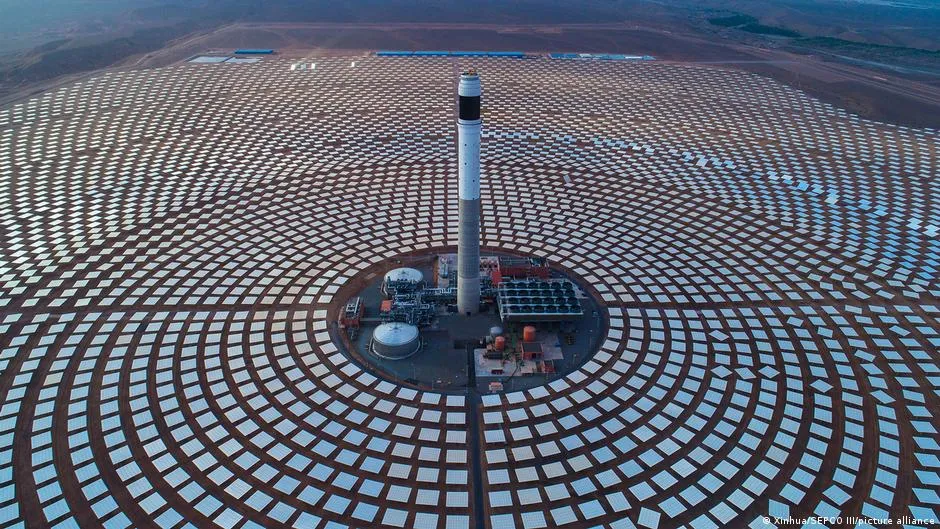
A massive solar tower rising from the Moroccan desert has become a symbol of the country's drive toward clean energy independence. But as Deutsche Welle reports, the ambitious vision has produced mixed results, with fossil fuel dependency and grid infrastructure constraints continuing to undermine progress.
Morocco's Noor solar complex, located near the city of Ouarzazate in the Sahara Desert, represents one of the largest concentrated solar power projects in the world. The facility uses mirrors to focus sunlight onto a central tower, generating steam that drives electricity-producing turbines.
Ambition versus reality
The project reflects Morocco's broader goal of generating more than half of its electricity from renewable sources by 2030. The country has positioned itself as a regional leader in clean energy, backed by significant investment and international partnerships.
However, according to DW's reporting, the gap between ambition and practical outcomes remains significant. Fossil fuels continue to dominate Morocco's overall energy mix, and the national grid has struggled to absorb and distribute the electricity generated by large-scale renewable installations efficiently.
Grid and financing constraints
Experts cited in the report point to grid infrastructure as a key bottleneck. Without sufficient transmission capacity and modern grid management systems, electricity generated by solar installations cannot always reach consumers reliably or cost-effectively.
Financing also presents challenges. Large solar projects of this scale require substantial upfront capital, and the long-term economics depend heavily on energy pricing policies and government subsidies, which can be difficult to sustain over time.
Regional significance
Despite the difficulties, Morocco's solar efforts carry significance beyond its borders. The country has developed cross-border energy connections and has explored opportunities to export renewable electricity to European markets, where demand for clean energy imports is growing.
Proponents argue that the infrastructure and expertise being built today will pay dividends as costs fall and grid technology improves. Critics, however, caution that without deeper structural reforms to the energy sector, flagship projects risk becoming symbols rather than solutions.
Morocco's experience mirrors broader challenges faced by developing nations attempting rapid clean energy transitions while managing existing fossil fuel infrastructure and the energy demands of growing economies.