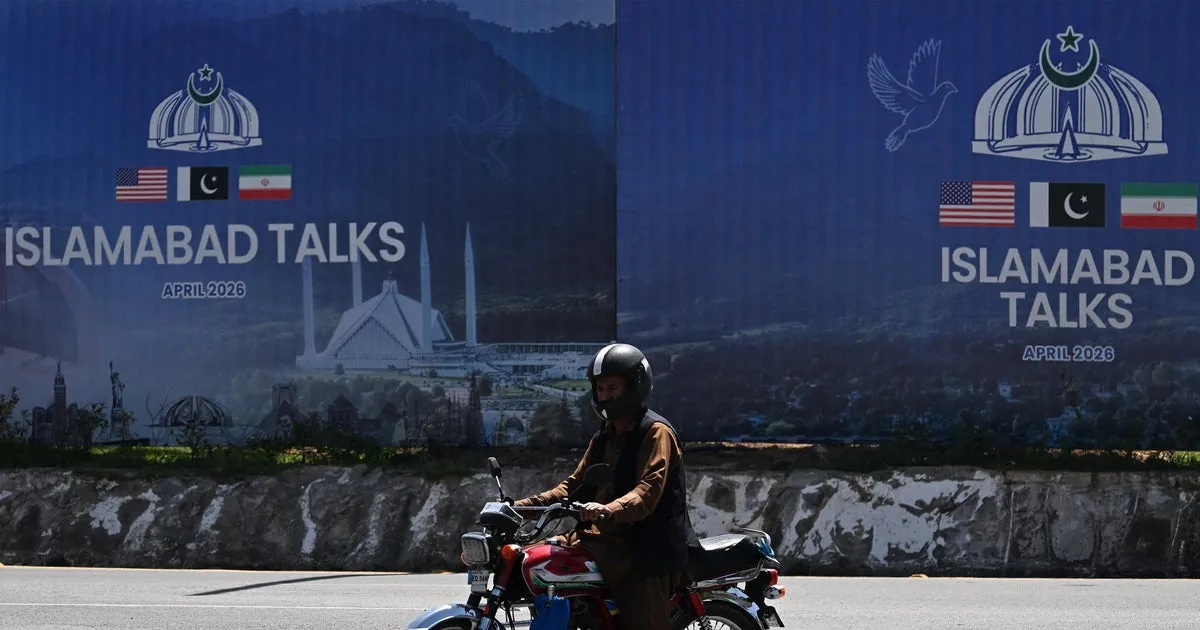
Pakistan is working to revive stalled nuclear negotiations between the United States and Iran, with Islamabad actively reaching out to both governments in an effort to bring them back to the table, according to a senior Pakistani government source who spoke to CBS News.
The diplomatic push, described by Pakistani officials as the 'Islamabad Process,' aims to establish a second round of talks following an earlier attempt that failed to produce a breakthrough. Pakistan has positioned itself as a potential intermediary between the two adversarial governments.
A fragile opening
The initiative reflects Islamabad's desire to play a more prominent role in regional diplomacy at a time of heightened tensions surrounding Iran's nuclear program and ongoing conflict in the broader Middle East. Pakistan shares a border with Iran and has historically sought to maintain workable relations with both Tehran and Washington, a balancing act that now appears central to its diplomatic strategy.
The senior Pakistani source did not detail the specific obstacles that caused the first round of talks to break down, nor did the source provide a timeline for when a potential second round might take place. CBS News reported that contacts between Pakistan, the United States, and Iran are described as active and ongoing.
High-stakes context
The effort comes amid sustained international concern over Iran's nuclear activities. Western governments, led by the United States, have long sought to constrain Iran's uranium enrichment capabilities through diplomacy, while Iran has insisted on its right to a civilian nuclear program.
Previous multilateral agreements, including the 2015 Joint Comprehensive Plan of Action, collapsed after the United States withdrew in 2018 under the Trump administration. Subsequent efforts to negotiate a revised agreement have repeatedly stalled.
Pakistan's role as a facilitator is notable given that the country itself is a nuclear-armed state outside the Nuclear Non-Proliferation Treaty framework. Islamabad has not historically been a central player in Iran-US nuclear diplomacy, making the reported initiative a departure from past patterns.
What comes next
No official confirmation of the talks or Pakistan's mediation role has been issued by the U.S. State Department or Iranian government spokespeople, according to CBS News. The information relies on a single senior Pakistani government source, and key details - including the format, location, and participants of any potential second round - remain unconfirmed.
The Pakistani source's willingness to speak to CBS News suggests Islamabad may be seeking to publicly signal its mediating ambitions, even as the diplomatic groundwork remains in early stages.