Philippine security officials have accused China of plotting to sabotage operations at a contested shoal in the South China Sea, claiming that plastic bottles containing cyanide were discovered on Chinese boats operating near Second Thomas Shoal in the Spratly Islands, according to a report by The Diplomat.
The allegation marks a significant escalation in the ongoing territorial dispute between Manila and Beijing over the strategically important waterway, where tensions have repeatedly flared in recent years.
The accusation
Philippine officials assert that the presence of cyanide aboard the Chinese vessels was not incidental, framing the discovery as evidence of a deliberate sabotage effort targeting Filipino personnel or assets at the shoal. The exact circumstances under which the bottles were found, including when and how Philippine authorities boarded or inspected the Chinese boats, were not fully detailed in the available source material.
Second Thomas Shoal, known in the Philippines as Ayungin Shoal, is the site of the grounded Philippine Navy vessel BRP Sierra Madre, which Manila has intentionally kept in place as a military outpost to assert its territorial claims. The shoal lies well within the Philippines' exclusive economic zone and has been a persistent flashpoint between the two countries.
Broader context
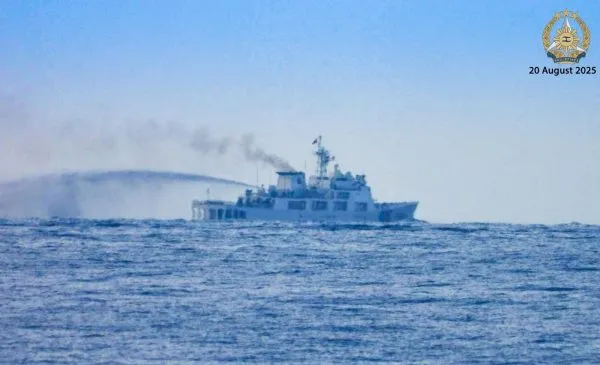
The cyanide allegation comes amid a prolonged pattern of confrontations at Second Thomas Shoal. Chinese coast guard and maritime militia vessels have repeatedly blocked or interfered with Philippine resupply missions to the BRP Sierra Madre, leading to numerous incidents involving water cannons, laser devices, and physical altercations between personnel on both sides.
Beijing maintains that it holds sovereignty over most of the South China Sea, including the Spratly Islands, a claim rejected by an international arbitral tribunal in 2016. The Philippines, the United States, and several other nations do not recognize China's expansive maritime claims in the region.
China has not publicly responded to the latest cyanide accusation based on currently available reporting. Beijing has previously dismissed Philippine allegations of aggressive behavior as exaggerated or politically motivated.
Regional implications
The claim is likely to draw further international attention to the South China Sea dispute at a time when the United States has reaffirmed its mutual defense commitments to the Philippines under their bilateral treaty. Washington has stated on multiple occasions that an armed attack on Philippine vessels or aircraft in the South China Sea would trigger American treaty obligations.
Philippine officials have increasingly gone public with documentation of incidents at sea, releasing photos and video footage in an effort to build international pressure on China over its conduct in the disputed waters.