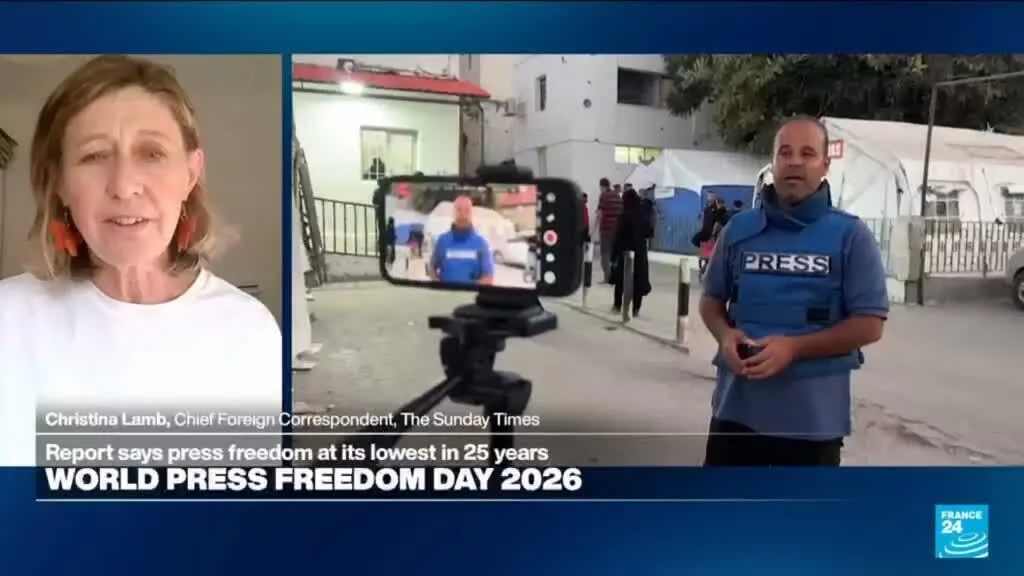
World Press Freedom Day arrives this year with little cause for celebration, according to the latest annual index from Reporters Without Borders (RSF), which has recorded the worst global press freedom conditions in the organization's 25-year history.
The global average score has fallen to a record low, and for the first time, more than half of all countries worldwide are now classified as having either "difficult" or "very serious" press freedom conditions. Only one percent of the world's population lives in a country rated "good" for press freedom, according to RSF data reported by France 24.
The most dangerous countries
Eritrea remains ranked as the most dangerous country for journalists, retaining its position at the bottom of the index. The figures reflect a broader deterioration in conditions for reporters across multiple regions, with governments, armed groups, and other actors increasingly targeting members of the press.
Impunity for crimes against journalists remains a central and persistent problem. The vast majority of killings, imprisonments, and attacks on reporters around the world go uninvestigated and unpunished, advocates say.
A call for accountability
British journalist Christina Lamb, a veteran war correspondent and chief foreign correspondent for The Sunday Times, has emerged as a prominent voice calling for structural change in how crimes against journalists are investigated and prosecuted.
Lamb is advocating for the creation of a new dedicated international body specifically tasked with investigating attacks on members of the press - an institution she argues is necessary given the consistent failure of national authorities to pursue accountability in such cases.
Her campaign reflects a growing consensus among press freedom advocates that existing mechanisms are insufficient. When journalists are killed or imprisoned, investigations are often conducted - if at all - by the very governments or institutions implicated in those abuses.
A systemic crisis
The RSF index underscores that the crisis is not isolated to specific conflict zones or authoritarian states, but reflects a worldwide trend. Democratic countries have also seen sliding scores in recent years, driven by factors including political hostility toward the media, legal pressure on journalists, and economic instability in the news industry.
Press freedom organizations argue that the decline in journalist safety and independence has direct consequences for public access to information, particularly in conflict zones and regions with limited independent reporting.
World Press Freedom Day, observed annually on May 3, was established by the United Nations to highlight the importance of a free press and to remind governments of their obligations to uphold freedom of expression.