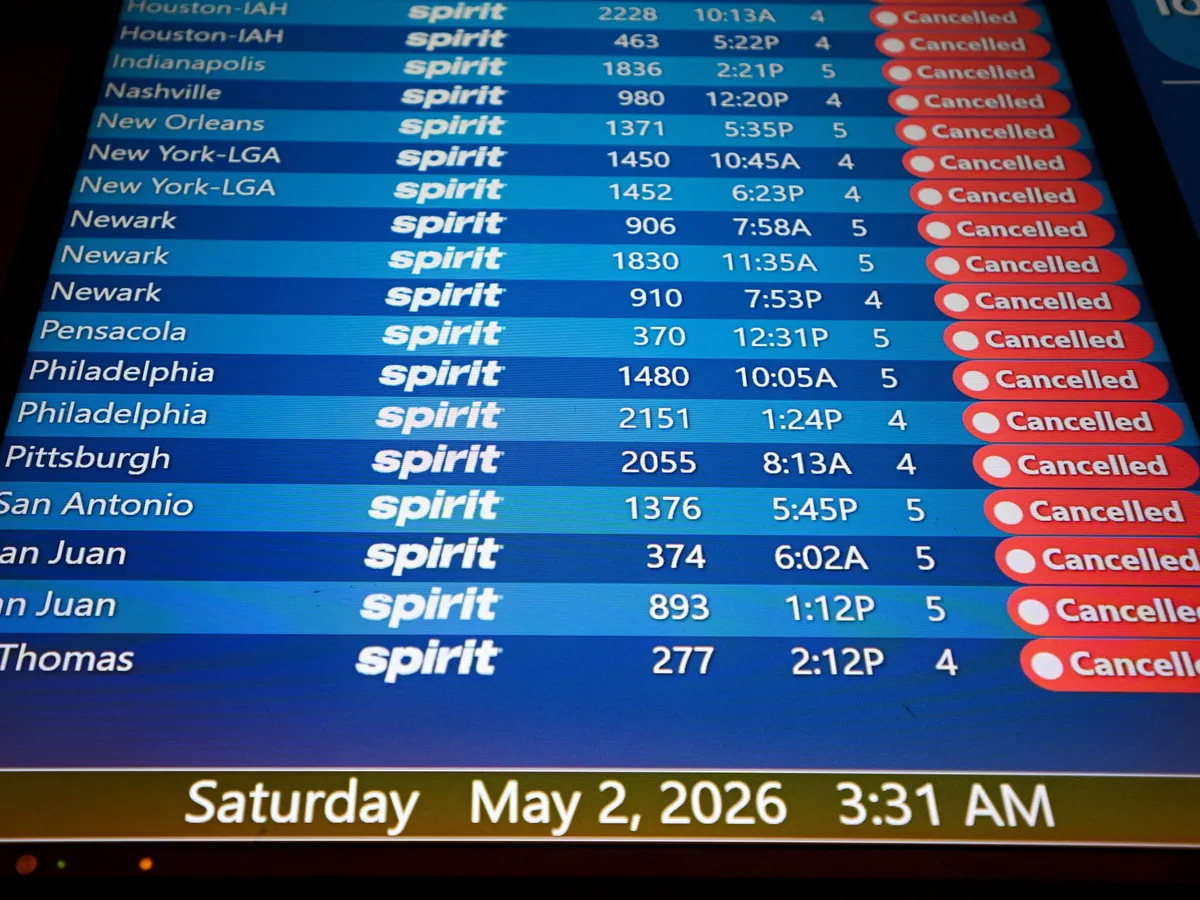
Spirit Airlines has shut down operations, becoming one of the most prominent corporate casualties linked to surging fuel costs that analysts attribute in part to the ongoing U.S. military conflict with Iran, according to reporting by Al Jazeera.
The Florida-based ultra-low-cost carrier ceased flights after negotiations for a government bailout failed to produce a rescue deal, according to the report. Spirit had been one of the largest budget airlines in the United States, known for its no-frills service model and highly price-sensitive customer base.

Fuel costs at the center of the collapse
Rising jet fuel prices, driven in part by broader oil market disruptions connected to the war on Iran, have placed severe strain on airline operating budgets across the industry. Budget carriers like Spirit are particularly vulnerable to fuel price spikes because their low-margin business model leaves little financial cushion to absorb sudden cost increases.
Unlike major legacy carriers, which often hedge fuel purchases months or years in advance and carry more diversified revenue streams, ultra-low-cost airlines depend heavily on keeping operational costs at a minimum to remain competitive on ticket pricing.

Bailout talks break down
Spirit's leadership had reportedly sought government financial assistance as a lifeline, but those discussions ended without an agreement, according to Al Jazeera. The outlet did not specify which government agencies or officials were involved in the negotiations, nor did it detail the terms Spirit had sought.
The airline's collapse marks a significant moment for the U.S. aviation sector, which had already faced financial turbulence in recent years. Spirit had previously navigated a prolonged and ultimately failed merger attempt with Frontier Airlines and a blocked acquisition bid by JetBlue Airways, leaving the carrier in a weakened financial position even before the current fuel crisis.

Broader industry impact
The shutdown raises questions about the resilience of the budget airline model in a period of elevated geopolitical risk and volatile commodity markets. Oil prices have fluctuated sharply in response to military developments involving Iran, a major crude oil producer and a country whose regional influence affects global energy supply chains.
Spirit's closure will affect thousands of employees and disrupt travel plans for passengers who held existing bookings. Travelers affected by the shutdown will need to seek alternative carriers, many of which operate at significantly higher price points than Spirit's typical fares.
Al Jazeera was the source of the initial report on the airline's closure. Additional details about the scope of layoffs, the status of outstanding tickets, and any potential asset sales were not immediately available.