While American political media is busy arguing about whatever outrage-of-the-week is currently melting everyone's brains, a genuinely consequential election is quietly approaching on June 7 - and almost nobody in Washington is talking about it.
Armenia, the small South Caucasus democracy squeezed between Russia, Turkey, Azerbaijan, and Iran (yes, all four of those simultaneously - rough neighborhood), is heading to the polls for a parliamentary election that could reshape its entire geopolitical orientation for decades to come, according to an analysis published by The Hill.
The big pivot
Here's the setup: Armenia has spent decades locked into Russia's orbit, relying on Moscow for security guarantees and economic ties. But after Russia essentially sat on its hands while Azerbaijan retook Nagorno-Karabakh in 2023 - a military humiliation that sent roughly 100,000 ethnic Armenians fleeing their ancestral homeland - the country's leadership has been quietly but unmistakably pulling away from Moscow and edging toward the West.
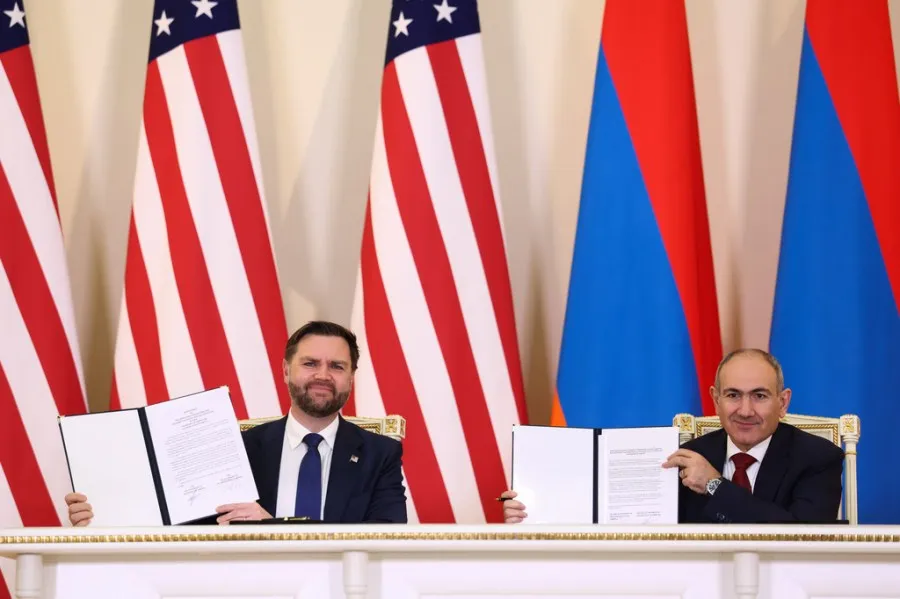
Prime Minister Nikol Pashinyan's government has suspended participation in the Russian-led Collective Security Treaty Organization, engaged more deeply with the European Union, and even held joint military exercises with the United States. For a country that used to be one of Russia's most reliable partners in the region, that's a seismic shift.
So what's actually at stake on June 7?
The election is essentially a referendum on whether Armenian voters want to stay the course on this westward pivot - or reverse it. Pro-Russian opposition forces are very much in the race, and the outcome is far from guaranteed. The Hill's analysis frames the vote as a test of two things at once: Armenia's own democratic resilience, and whether the United States is actually serious about supporting countries that take political risks to move away from Russian influence.
That second part is the awkward one. Washington has historically cheered on pro-Western pivots in the post-Soviet space, but backing tends to get complicated when budgets are tight and the country in question is small, landlocked, and not sitting on any oil reserves that anyone's getting excited about.
Why you should care even if you can't find Armenia on a map
The South Caucasus is one of those regions that operates as a kind of geopolitical pressure valve. What happens there ripples into Russia's standing, Turkey's ambitions, Iran's calculations, and the EU's eastern neighborhood policy. A democratic Armenia that successfully anchors itself to Western institutions would be a meaningful data point - proof that the post-Soviet westward drift isn't just a Ukraine-specific phenomenon.
Or it could go the other way. And Washington, reportedly, is not paying nearly enough attention to help tip the scales.
June 7. Mark your calendars, folks.