Love, unity, shared democratic values - sure, those are nice. But if you want the real reason EU bigwigs are flying into Tivat, Montenegro this Thursday for the EU-Western Balkans summit, you might want to skip the idealism and head straight to the balance sheet.
According to Euronews, top EU chiefs are gathering for the bloc's summit with Western Balkan nations, pushing hard for enlargement at a time when Brussels is already juggling 27 member states with the grace of a caffeinated octopus. So what gives?
The billion-euro elephant in the room
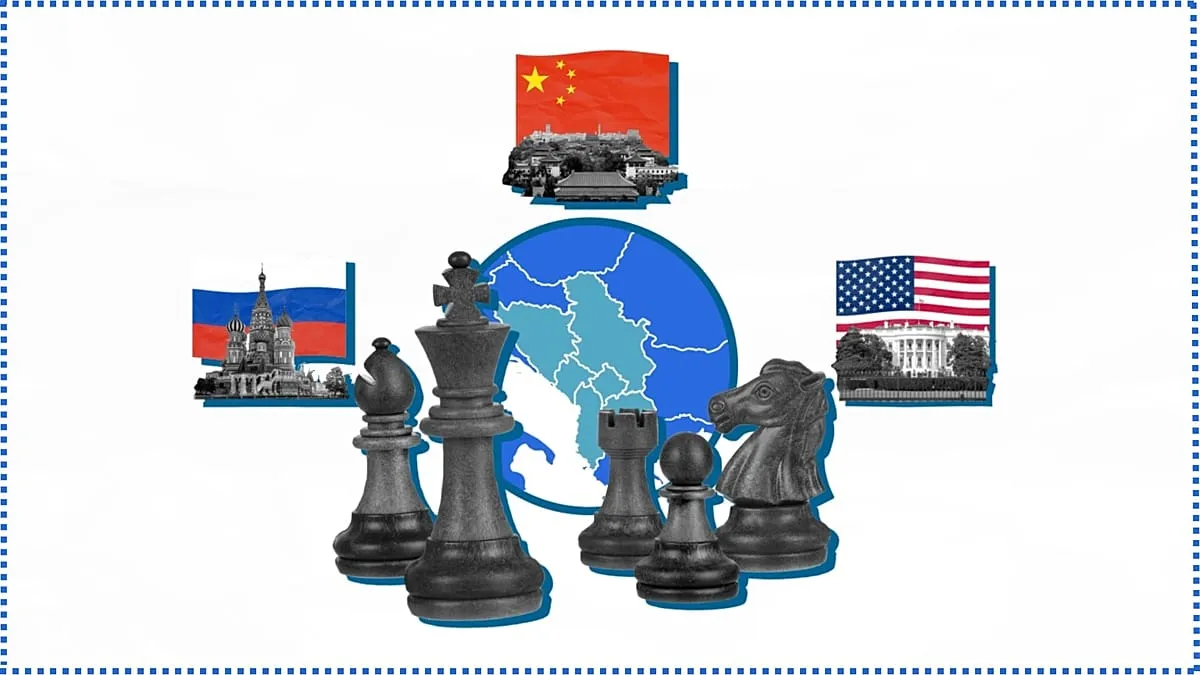
The Western Balkans - comprising Serbia, Albania, Bosnia and Herzegovina, Kosovo, Montenegro, and North Macedonia - sit on a region of serious strategic and economic interest. Think untapped markets, natural resources, young workforces, and a geography that makes the EU's internal map look annoyingly incomplete. For a bloc facing demographic decline and economic stagnation, that's not nothing. That's actually quite a lot.
Bringing these countries into the fold would mean access to new consumers, new labor pools, and critically, tighter control over trade and investment corridors that currently leave the door open for other... let's call them "enthusiastic" global players, like China and Russia, to waltz in with infrastructure deals and soft-power handshakes.
But wait, hasn't the EU tried this before?
Yes. For decades, actually. The Western Balkans have been in various states of "candidate" or "potential candidate" status since the early 2000s. Progress has been slower than a parliamentary committee deciding where to have lunch. Issues like rule of law, corruption, and bilateral disputes between countries have kept the process grinding along at a speed that makes continental drift look urgent.
What's different now is a combination of geopolitical pressure - Russia's war in Ukraine sharpened everyone's mind about having a buffer of friendly, stable democracies - and a growing awareness that leaving the Western Balkans in a geopolitical grey zone is increasingly expensive in ways that don't show up as idealism, but do show up as risk.
The summit in Tivat
The Tivat gathering is expected to address the pace of accession negotiations and what concrete steps can accelerate integration. Whether anything binding comes out of it, or whether it ends up as another round of enthusiastic communiques and lukewarm commitments, remains to be seen.
What is clear, as Euronews reports, is that Brussels is leaning into the economics of enlargement harder than ever - because when idealism stalls, a multi-billion euro argument tends to get people back to the table.
Call it pragmatic. Call it cynical. Call it Tuesday in Brussels.