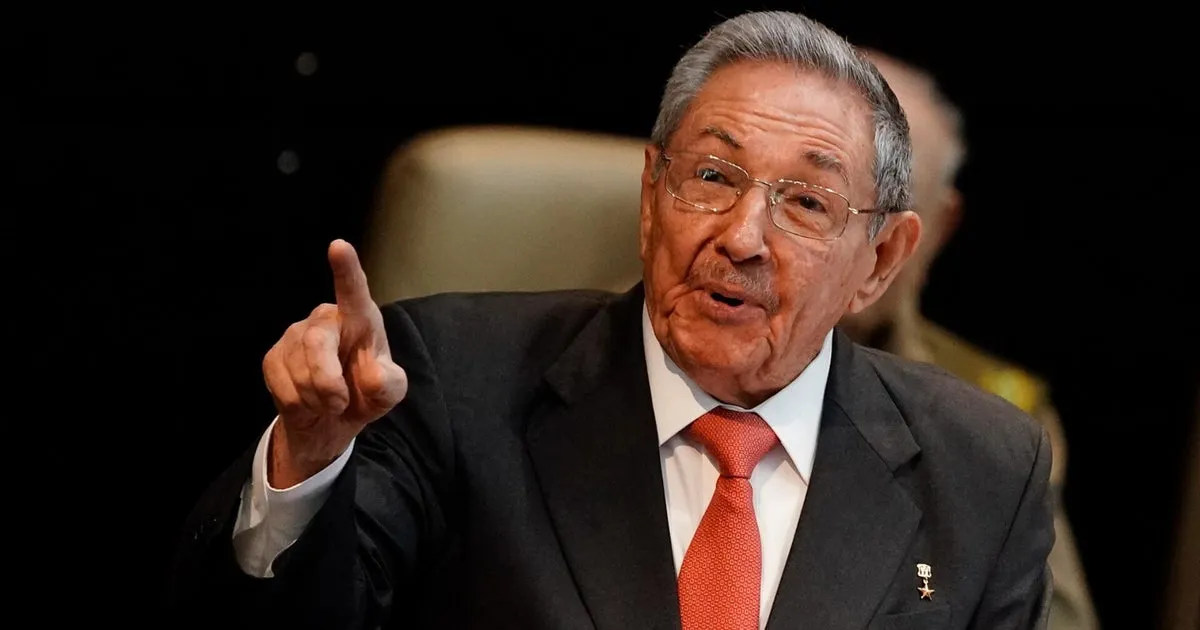
Hold onto your vintage American cars, folks, because Washington is reportedly cooking up something that would have been unthinkable just a few years ago: a formal U.S. indictment targeting Raúl Castro, the 93-year-old former Cuban president and brother of the late revolutionary icon Fidel Castro.
According to a report covered by CBS News, the United States is ramping up pressure on Cuba with a potential criminal indictment of Raúl Castro himself - the man who ran the island nation for over a decade after his brother stepped down. CBS News correspondent Cristian Benavides has been following the story closely.
What this could actually mean
On paper, indicting a former head of state of a country the U.S. doesn't even have normal diplomatic relations with sounds like the geopolitical equivalent of sending a strongly worded letter to someone who doesn't have your email address. But analysts suggest the move could carry real symbolic and strategic weight.
The theory goes like this: by raising the legal and diplomatic stakes dramatically, the U.S. could create leverage that forces Cuba's current leadership - which still operates in the long shadow of the Castro era - to consider actual political and economic reforms. Think of it as the world's most high-stakes negotiation tactic.
But the questions are piling up fast
Before anyone pops the champagne (or the mojitos, given the theme), there are serious questions that remain unanswered. Chief among them: what would an indictment actually accomplish in practice? Cuba does not extradite its citizens to the United States, and Raúl Castro isn't exactly booking flights to Miami anytime soon.
Critics might argue this is more about domestic political optics - particularly with Cuban-American communities in key swing states - than a genuine mechanism for change on the island. Others, however, see it as part of a broader pressure campaign that, combined with existing sanctions and international isolation, could eventually force Havana's hand.
The bigger picture
Cuba has been under immense economic strain in recent years, with widespread power outages, food shortages, and a brain drain of young Cubans fleeing to the United States in record numbers. Whether a Castro indictment becomes a genuine turning point or just another chapter in the long, complicated, and frankly exhausting history of U.S.-Cuba relations remains very much an open question.
As CBS News notes, the potential move could mean reform - but the road between "potential indictment" and "actual democratic change" runs through some very complicated territory.
Stay tuned, because this particular story has more layers than a good Cuban sandwich.