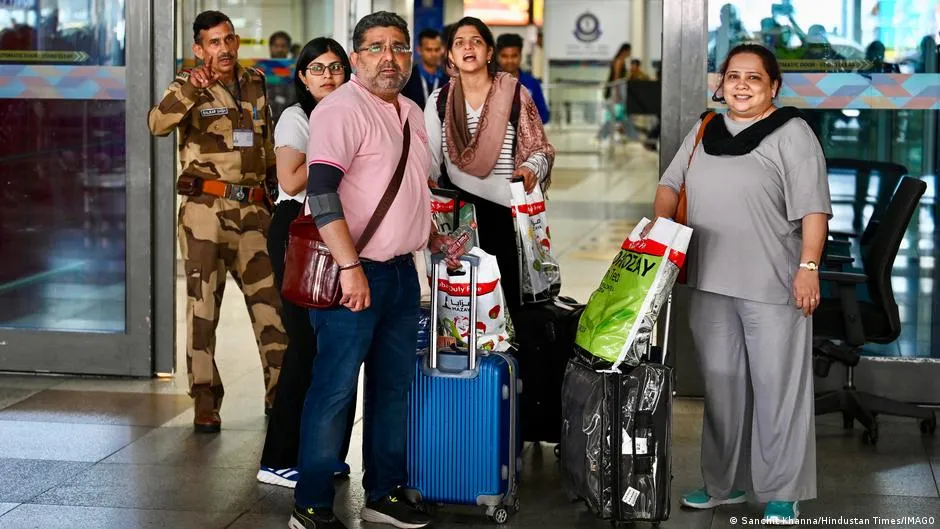
Thousands of Indian migrant workers have been forced to abandon their jobs in Gulf nations and return home following economic disruption caused by the conflict involving Iran, according to reporting by Deutsche Welle. The mass displacement is now creating ripple effects inside India itself.
The Gulf region has long served as a critical destination for Indian labor migrants, with millions employed across countries such as the United Arab Emirates, Saudi Arabia, Kuwait, Qatar, Bahrain, and Oman. These workers have historically sent billions of dollars in remittances back to India each year, making the Gulf corridor one of the most economically significant migration routes in the world.
Livelihoods disrupted
The conflict has rattled Gulf economies, prompting business slowdowns, construction halts, and uncertainty across multiple sectors that heavily rely on foreign labor. As employers cut costs or suspend operations, Indian workers - many of whom hold low- to mid-wage positions in construction, hospitality, and domestic services - have found themselves without work or income.
The situation has left returnees in a precarious position. Many workers took on debt to finance their travel and placement abroad, and their sudden return without earnings leaves both them and their families financially exposed. For some workers, re-entering the Indian job market poses a significant challenge given limited local opportunities in their home states.
Economic impact reaches India
India's broader economy is also beginning to feel the strain. A decline in remittance flows from the Gulf would affect household incomes across multiple Indian states, particularly Kerala, Uttar Pradesh, Bihar, Rajasthan, and Tamil Nadu, which send large numbers of workers to the region.
Remittances from the Gulf have historically constituted a substantial share of India's total inward remittances, which reached record highs in recent years. Any sustained reduction could affect foreign exchange reserves and household consumption in states that are heavily dependent on money sent from abroad.
Uncertain road ahead
The future for displaced workers remains unclear. Indian authorities have not yet announced large-scale reintegration programs, and the timeline for any stabilization of Gulf labor markets depends largely on how the broader regional conflict evolves.
Analysts note that the situation underscores the vulnerability of economies - both in sending and receiving countries - that are deeply tied to migrant labor flows. A prolonged disruption could reshape migration patterns that have been in place for decades.
Deutsche Welle reported that the scale of returns and the economic consequences for affected families continue to develop as the situation in the region remains fluid.