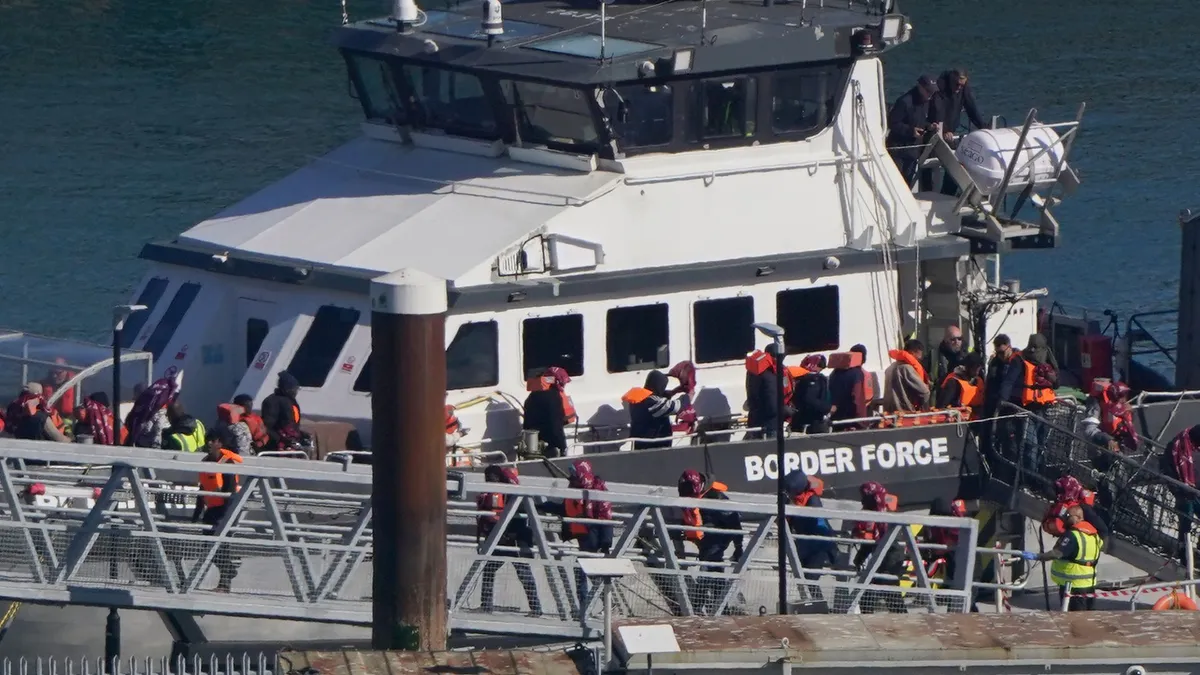
In what can only be described as the universe's most expensive lesson in irony, a small migrant boat successfully crossed the English Channel and arrived in Dover - just days after the UK government signed a landmark £662 million agreement with France specifically designed to stop that exact thing from happening.
According to Sky News, the crossing came hot on the heels of a major new bilateral deal struck earlier this week between London and Paris, billed as a serious escalation in the two nations' joint effort to curb small boat journeys across one of the world's busiest shipping lanes.
So what's the deal, exactly?
The agreement represents a significant chunk of cash - £662 million, to be precise - aimed at bolstering French patrols, detection technology, and border enforcement on the other side of the Channel. The idea, in theory, is that if France can stop boats from launching in the first place, fewer people make the dangerous crossing.
In practice, at least one boat apparently skipped the memo.
Why does this keep happening?
To be fair to both governments, no deal - regardless of the price tag - is going to produce overnight results. Border experts and migration analysts have long argued that enforcement-only approaches address the symptom rather than the underlying drivers of Channel crossings, which include people fleeing conflict, persecution, and economic hardship in search of safety or opportunity in the UK.
The Channel route remains one of the most dangerous irregular migration paths in Europe, and the people making the crossing are often doing so after exhausting other options. French authorities do intercept a significant number of attempted crossings, but the sheer volume of attempts means some will always get through.
The politics of it all
For the UK government, the optics are, to put it diplomatically, not great. Announcing a massive financial commitment to stop the boats and then having a boat show up almost immediately is the kind of thing that opposition politicians absolutely live for. Expect the clip reel to be ready before teatime.
Still, judging a complex, long-term agreement by what happens in its first 72 hours would be a bit like cancelling a gym membership because you didn't have abs after the first session.
The broader question - whether financial and enforcement pressure on France can meaningfully reduce crossings in a sustained way - remains very much open. Previous agreements have shown mixed results, and migration advocacy groups argue that without safe and legal pathways, demand for dangerous routes will persist regardless of how many euros (or pounds) are thrown at the problem.
Source: Sky News