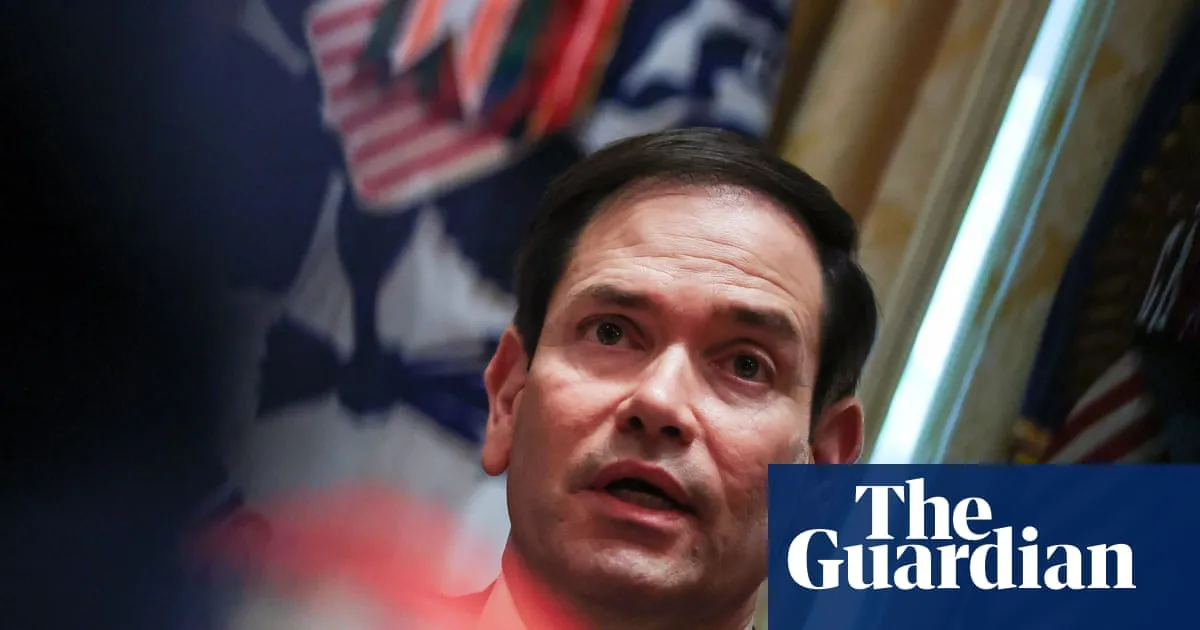
The United States has officially designated Brazil's two largest criminal organizations - the First Capital Command (PCC) and the Red Command - as foreign terrorist organizations, Secretary of State Marco Rubio announced on Thursday. And while the move is ostensibly about fighting crime, the political fallout in Brazil is anything but subtle.
According to reporting by The Guardian, the designation is being widely interpreted inside Brazil as a direct snub to President Luiz Inácio Lula da Silva, who had strongly opposed the terrorist label for the two gangs. Lula's opposition wasn't exactly a secret, which makes the timing of Rubio's announcement feel less like a coincidence and more like a very loud message sent via diplomatic megaphone.
So what actually changes?
Designating a group as a foreign terrorist organization under U.S. law is not just symbolic chest-thumping. It triggers a cascade of legal consequences - including the ability to freeze assets, prosecute financial supporters, and restrict travel for affiliated individuals. For criminal networks with transnational reach like the PCC, which has documented operations across South America and even into Europe, this could complicate their logistics considerably.
The PCC, founded inside a São Paulo prison in 1993, has grown into one of the most powerful criminal enterprises in the Western Hemisphere. The Red Command, based primarily in Rio de Janeiro, is older and historically tied to leftist prison politics - though at this point, the only ideology either group seems to practice is the extremely profitable kind.
The political chess game nobody asked for
Here is where things get spicy. Brazil heads into a presidential election cycle with Lula facing pressure from the far-right, and the Guardian's reporting notes that the designation is seen as a boost for his far-right challenger. The optics are rough for Lula: his administration lobbied against the designation, Washington did it anyway, and now his political opponents get to ask uncomfortable questions about why he was so eager to keep drug cartels off a terrorism list.
Whether the designation will have any meaningful boots-on-the-ground impact in Brazil is genuinely debated. Brazilian authorities have their own frameworks for dealing with organized crime, and some experts argue that the terrorist label - a very American legal instrument - maps awkwardly onto gang structures that operate more like vertically integrated crime corporations than ideologically motivated insurgencies.
But in the current political climate, "awkward" is very much on the menu. Rubio has served notice, Lula has egg on his face, and Brazil's election season just got a very American subplot nobody ordered.