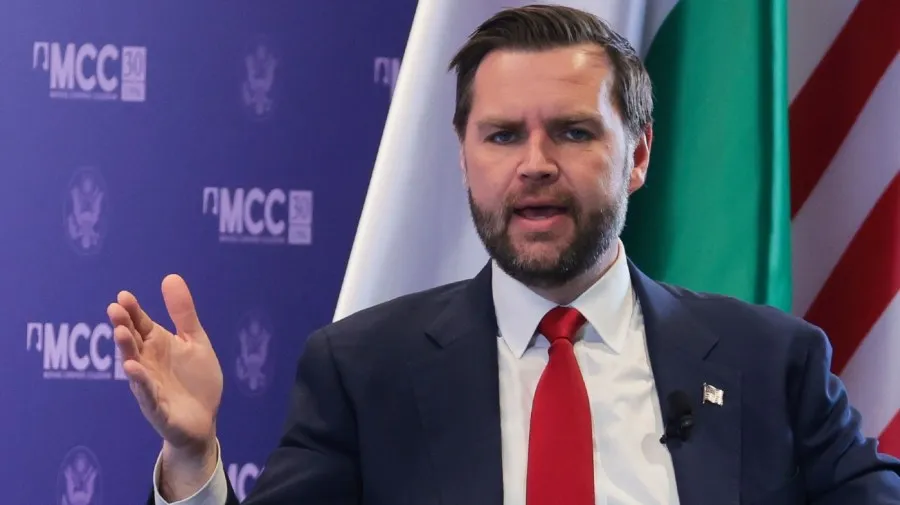
Vice President JD Vance emerged from a high-stakes diplomatic trip to Islamabad, Pakistan, this week with a message for Tehran that could double as a sports metaphor and a mild threat: the ball is in Iran's court.
Speaking to Fox News host Bret Baier on Special Report during a roughly 20-minute interview on Monday, Vance confirmed that the U.S. delegation he personally led to Pakistan's capital departed without a deal in hand - a detail that somehow managed to be both unsurprising and slightly alarming at the same time, according to a report by The Hill.
So what actually happened in Islamabad?
The short version: the Americans showed up, talks happened, and the Americans left. No agreement was announced. Vance's framing, however, was that the U.S. had done its part and now the next move belongs to Iran - a classic diplomatic "we tried" moment wrapped in a sports analogy.
The visit to Islamabad is notable because Pakistan has historically served as a back-channel facilitator between Washington and Tehran, given that the U.S. and Iran have no formal diplomatic relations. Having Vance personally lead the delegation signals the Trump administration is treating these talks as a serious priority - at least serious enough to fly the VP to South Asia.
What Iran actually wants (and what the U.S. is offering)
The core tension, as it has been for decades, revolves around Iran's nuclear program. The U.S. wants verifiable limits. Iran wants sanctions relief and security guarantees. Both sides want the other side to blink first, which is essentially the world's least fun staring contest - one that has been going on since 2018 when the original nuclear deal collapsed.
Vance's comments suggest the U.S. believes it has put forward enough of a framework to move things forward, but Iranian leadership has not publicly signaled any enthusiasm for rushing toward a deal.
The optimism-reality gap
There is a particular brand of Washington optimism that involves leaving negotiations without results but insisting things are going well. Vance appears to be operating in that mode. Whether that optimism is grounded or purely performative remains to be seen.
What is clear, per The Hill's reporting, is that both sides are still talking - indirectly, through intermediaries - and that the Trump administration is presenting itself as willing to reach an agreement. Whether Tehran reads those signals the same way is another question entirely.
For now, the ball is in Iran's court. Iran has not confirmed it received the ball. Diplomatic tennis continues.