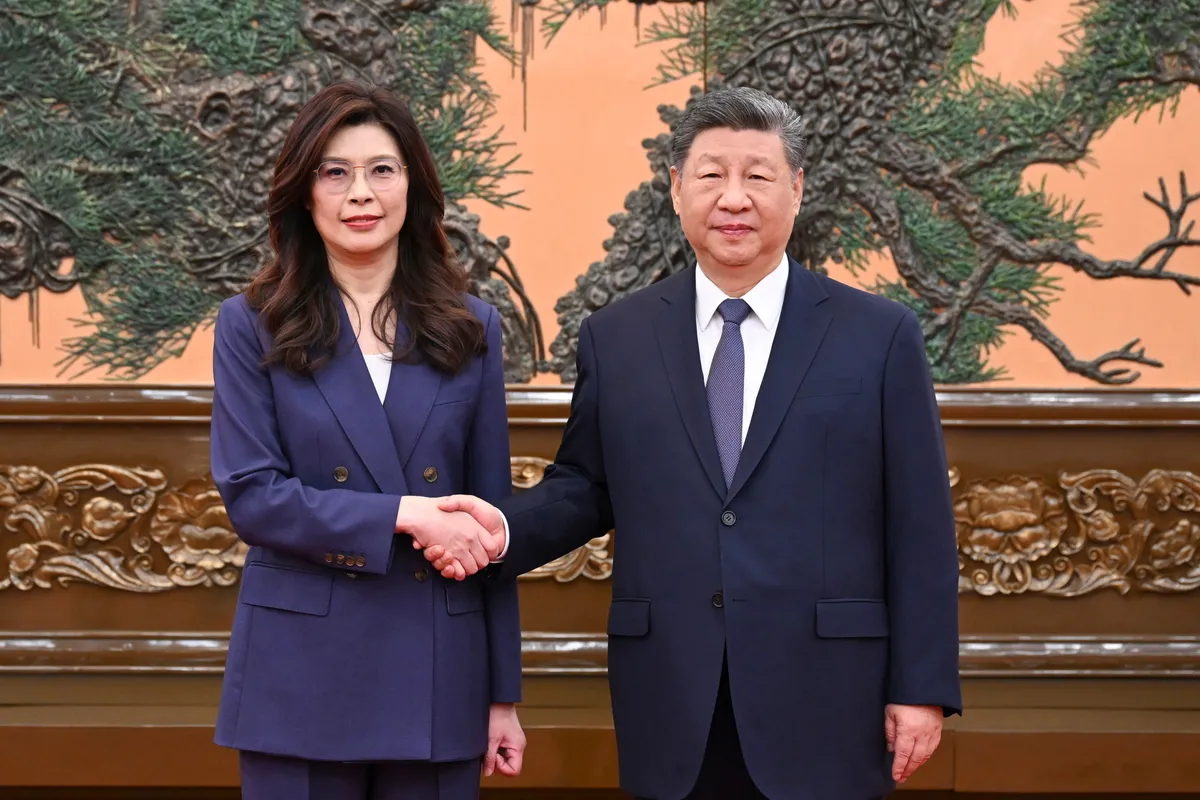
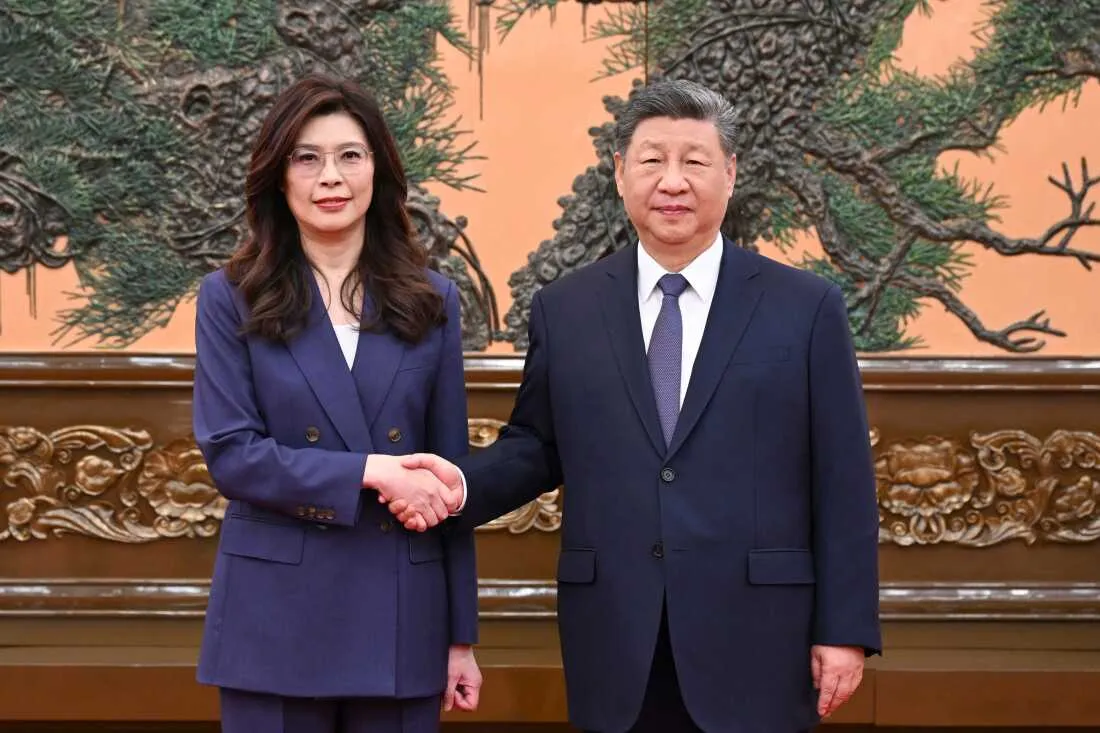
Chinese President Xi Jinping met with Cheng Li-wun, a senior figure from Taiwan's main opposition party, the Kuomintang (KMT), in a high-profile encounter that comes shortly before Xi is expected to hold talks with U.S. President Donald Trump, according to NPR.
The two sides agreed during the meeting to pursue peace across the Taiwan Strait, a goal that both parties described in broadly cooperative terms. The KMT has historically maintained warmer ties with Beijing than Taiwan's current ruling party, the Democratic Progressive Party (DPP).
Ruling party sounds alarm
Taiwan's DPP responded to the meeting with notable concern. Party officials warned that Beijing could use its engagement with the KMT opposition as a mechanism to bypass and undermine Taiwan's elected government and democratic institutions.
The worry reflects a recurring tension in cross-strait politics: while the KMT and the Chinese Communist Party share historical roots and have periodically engaged in dialogue, the DPP views such contacts with suspicion, arguing they can give Beijing a degree of political leverage inside Taiwan without engaging the island's actual governing authority.
Timing draws attention
The meeting's proximity to an anticipated Xi-Trump summit adds a layer of geopolitical significance. Taiwan remains one of the most sensitive flashpoints in U.S.-China relations, and any signals from Beijing about its preferred interlocutors on the island are likely to be closely watched by Washington.
The United States does not formally recognize Taiwan as an independent state but maintains a longstanding policy of opposing any unilateral change to the status quo across the strait. Washington is also legally obligated under the Taiwan Relations Act to provide Taiwan with the means to defend itself.
Background on cross-strait dynamics
China claims Taiwan as part of its territory and has never renounced the use of force to achieve unification. Taiwan's government, under DPP leadership, has resisted Beijing's framing and emphasized the island's de facto independence and its democratic system.
The KMT, by contrast, has generally supported maintaining close economic and cultural ties with the mainland, though it also opposes immediate unification and supports the status quo.
Meetings between KMT officials and Chinese leadership are not unprecedented, but they consistently generate political debate within Taiwan about the appropriate boundaries of opposition engagement with Beijing.
NPR reported that both Xi and Cheng framed the encounter around the language of shared heritage and peaceful cross-strait relations, without providing specific policy commitments.