In news that will surprise absolutely nobody who has watched a colleague paste a garbage ChatGPT output directly into a company report, new research has found that large majorities of AI users will simply accept wrong answers from AI systems without so much as raising an eyebrow. Scientists are calling this phenomenon "cognitive surrender," which is a very polite academic way of saying "humans are outsourcing their brains to a glorified autocomplete."
What the research actually found
According to findings reported by Ars Technica, experiments were run in which participants were presented with deliberately faulty AI-generated answers. The results were, frankly, a little alarming: large majorities of users accepted those incorrect outputs without challenging them. Not a small fringe of lazy participants - actual majorities just... went with it.

The research frames this as a collapse in critical engagement. Rather than using AI as a tool to augment their thinking, many users appear to be replacing their thinking entirely. The moment the AI spits out an answer, the brain apparently clocks out and heads home early.
Why this matters more than your average "technology bad" panic
Look, every generation has its moral panic about new technology rotting our minds - television, video games, smartphones, the printing press probably. But "cognitive surrender" to AI carries some specific risks worth taking seriously.
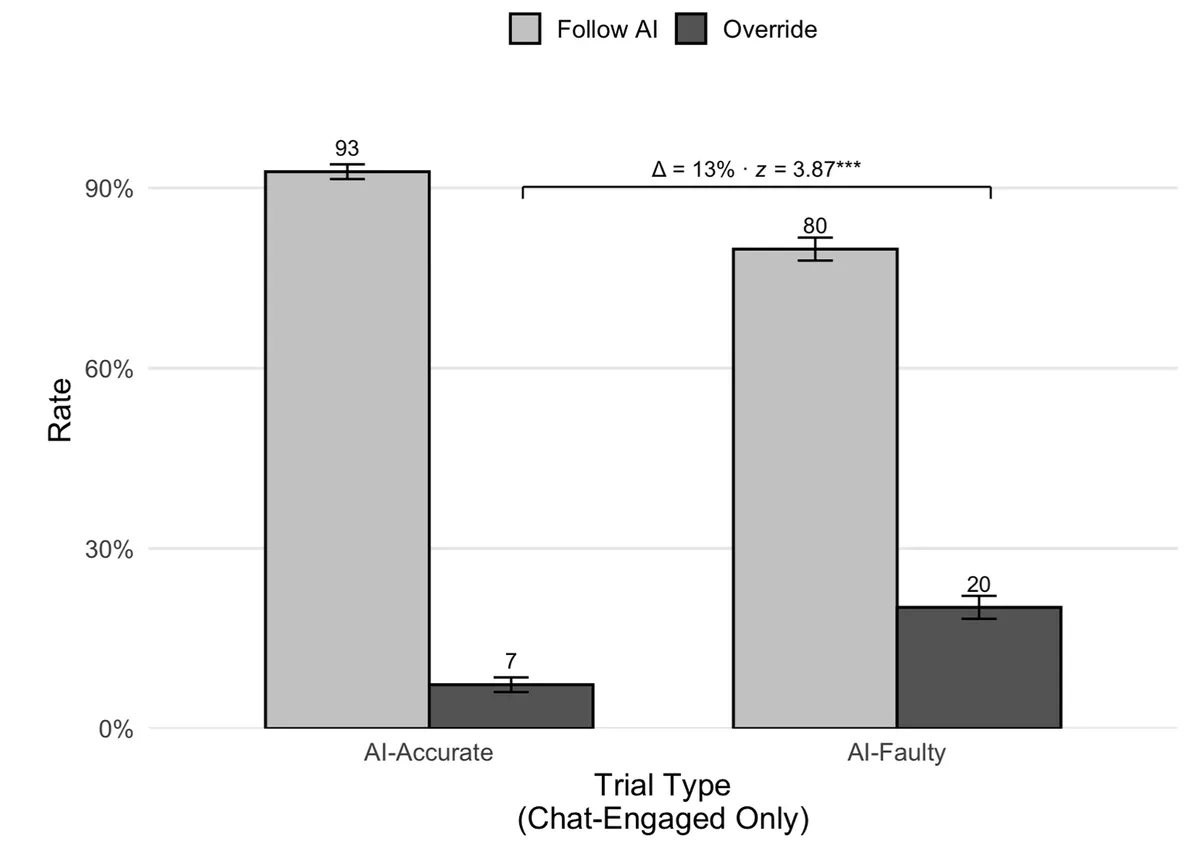
Large language models are confidently wrong with some regularity. They hallucinate facts, misattribute quotes, and present fabrications with the calm authority of a tenured professor. If users are not applying any skeptical filter to AI outputs - and this research suggests many are not - then errors get laundered into decisions, documents, and real-world actions without anyone noticing.
The researchers are not claiming AI is evil. The concern is about the human side of the equation: the habit of critical thinking apparently being quietly abandoned when a chatbot is in the room.
The uncomfortable mirror moment
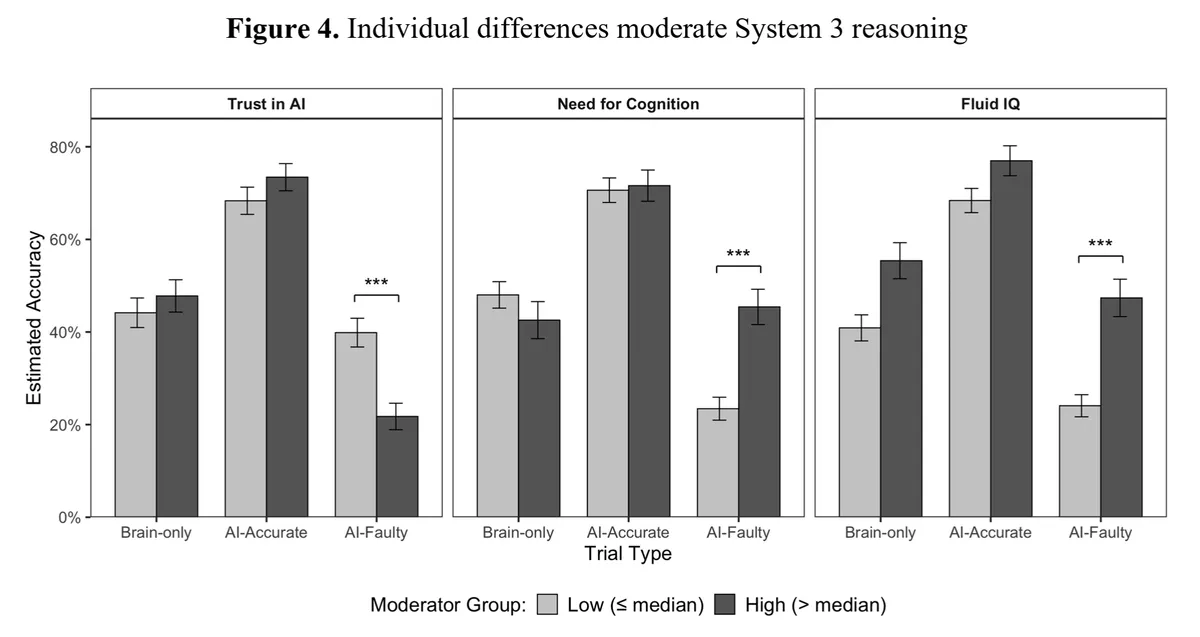
Here is the part where everyone reading this thinks "well, not me, obviously" - which is almost certainly what the study participants thought too. Overconfidence in our own skepticism is its own cognitive trap, and researchers studying human-AI interaction have noted repeatedly that the effect is strongest when users perceive the AI as authoritative or expert.
In other words, the better the AI sounds, the less likely you are to question it. Which is a bit of a design problem, given that making AI sound confident and fluent is kind of the entire product pitch.
The research does not yet offer a clean solution, but awareness is presumably step one. Step two might involve actually reading the output before hitting send. Revolutionary stuff, really.