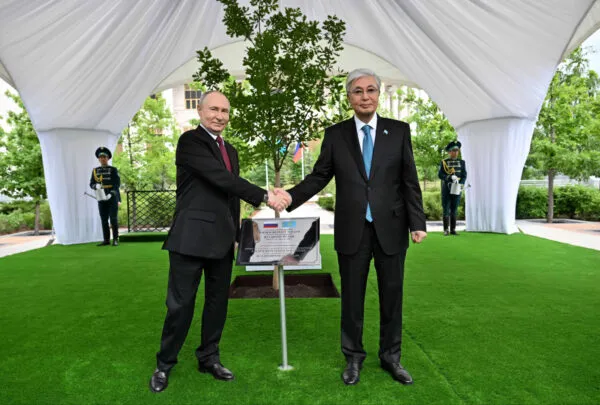
In what is either a brilliant infrastructure move or the world's most expensive favor, Kazakhstan and Russia have stepped forward with a concrete plan to build a nuclear power plant worth $16.4 billion, according to a report by The Diplomat. The kicker? Moscow is reportedly covering as much as 85 percent of the financing.
That's roughly $13.9 billion in Russian money going into Kazakhstani soil. For context, that's more than most countries spend on their entire annual defense budgets. Russia, apparently, is feeling generous - or strategic. Probably both.
So what's actually happening?
The project represents a significant deepening of energy ties between Astana and Moscow, with Russia's state nuclear giant Rosatom widely expected to be the driving force behind the construction. Kazakhstan, which has long debated building its own nuclear capacity despite sitting on some of the world's largest uranium reserves, has been eyeing nuclear power as a solution to its chronic electricity shortages.
Yes, you read that right. The country that supplies a huge chunk of the world's raw uranium has been dealing with power deficits. The irony is thick enough to enrich.
Why does this matter?
The deal raises eyebrows beyond just the sheer dollar figure. Critics and geopolitical analysts have long warned that Russian-financed nuclear infrastructure comes with strings attached - long-term dependency on Russian fuel, technology, and maintenance cycles being the most obvious. When Rosatom builds the plant, Rosatom tends to remain a fixture in its operation for decades.
For Kazakhstan, however, the calculus may be simpler: the lights need to stay on, domestic energy demand is rising, and coal is increasingly politically toxic on the global stage. Nuclear, for all its baggage, ticks a lot of boxes.
The bigger picture
This announcement comes at a time when Russia has been actively expanding Rosatom's footprint across Asia, Africa, and the Middle East - using nuclear plant deals as a form of long-range geopolitical chess. Financing 85 percent of a project is not charity; it is leverage, served cold and with a 60-year fuel contract on the side.
Kazakhstan has not confirmed every detail publicly, and the full terms of the financing arrangement remain murky. Whether Astana sees this as pragmatic energy policy or a Faustian bargain dressed in reactor cladding will likely become clearer as construction timelines and loan terms are disclosed.
For now, the $16.4 billion question is: who exactly is getting the better deal here?