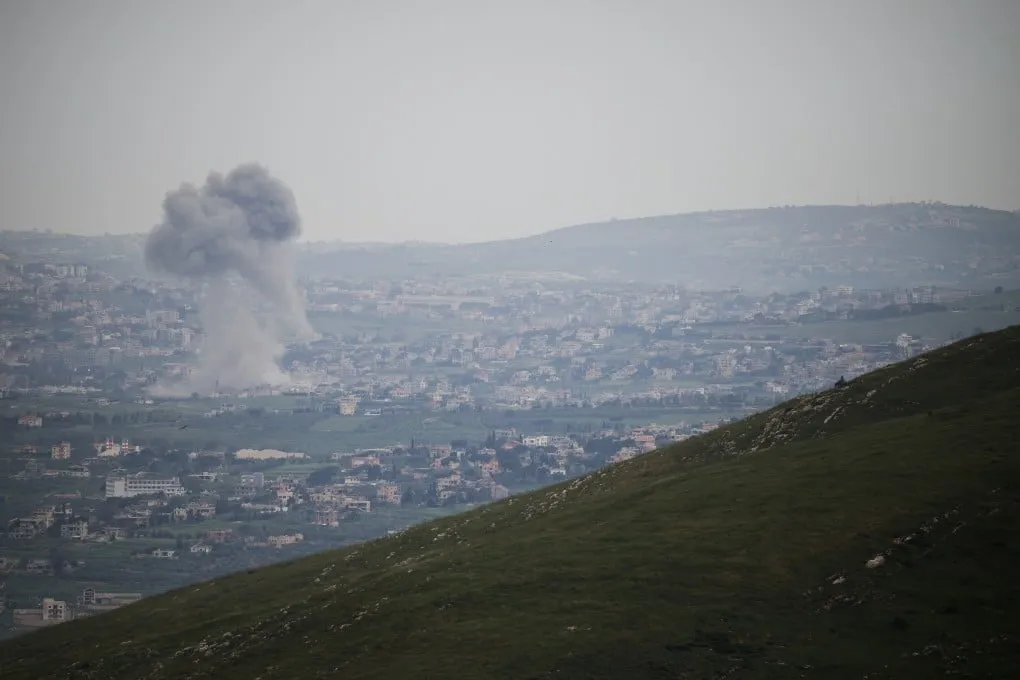
If you thought a ceasefire meant, you know, people stopped firing, Lebanon has a sobering update for you. According to Lebanon's health ministry, Israeli strikes on southern Lebanon on Sunday killed 14 people - making it the deadliest single day since the Israel-Hezbollah ceasefire officially came into force just over a week ago, as reported by the South China Morning Post.
The world's most awkward truce
To be fair, both sides are very busy explaining why the other guy broke the ceasefire first. Israel's Prime Minister Benjamin Netanyahu confirmed that the Israeli military is "vigorously" targeting Hezbollah positions - which, depending on your definition of ceasefire, is either completely reasonable or spectacularly missing the point.
Hezbollah, backed by Iran, is not exactly sitting quietly either. The group has vowed to keep responding to what it calls Israeli "violations" of the truce. So to recap: Israel says it's responding to Hezbollah violations, Hezbollah says it's responding to Israeli violations, and 14 people in southern Lebanon are dead on what is supposed to be a day of peace.
The fragile truce nobody seems to trust
The ceasefire, which came into force roughly a week before Sunday's strikes, was already being described as "fragile" - a diplomatic word that apparently means "existing mainly on paper." Israel's military has carried out repeated strikes since the agreement took effect, according to the SCMP report.
This is, unfortunately, a familiar pattern in the region. Ceasefires tend to collapse not with a dramatic announcement but with a slow accumulation of "technically justified" violations from every direction until the original agreement is just a sad footnote in a longer war.
What to watch next
- Whether international mediators step in before this "fragile" truce becomes a "former" truce
- Iran's posture, given Hezbollah's close ties to Tehran
- The humanitarian situation in southern Lebanon, where civilian casualties continue to mount
For now, both parties appear committed to the ceasefire in roughly the same way that a toddler is committed to not eating candy - in principle, loudly, and not in practice.