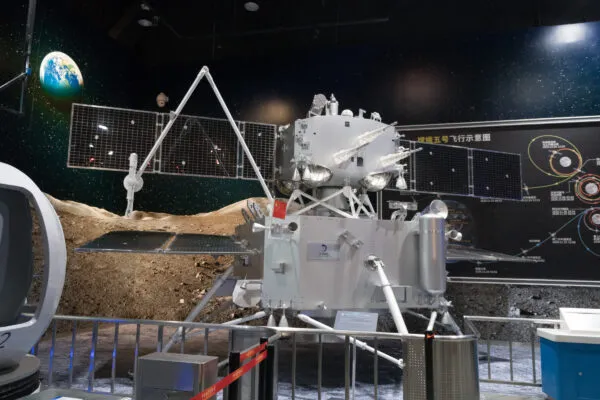
Forget flags and footprints. The second space race is about something far more practical - whoever gets to the moon first and sets up shop gets to start mining it. And according to a deep-dive analysis published by The Diplomat, China might actually be pulling ahead.
So what exactly is everyone fighting over?
The moon, it turns out, is not just a romantic backdrop for werewolf movies and bad poetry. It is potentially loaded with resources - think helium-3 for future fusion energy, rare earth minerals, and water ice near the poles that could support permanent human habitation and fuel production. Both the United States and China have identified establishing a permanent lunar presence as a strategic priority, with resource extraction as an explicit part of the mission.
This is not vague sci-fi dreaming. Both nations have concrete programs aimed at putting boots (and drills) on the lunar surface within this decade.
Where things currently stand
China has been methodically ticking boxes. Its Chang'e lunar program has already landed rovers, returned lunar samples, and is building toward a crewed mission. Beijing has also announced plans for an International Lunar Research Station, inviting other nations to join its coalition - essentially building a geopolitical alliance around the moon.
The United States, through NASA's Artemis program and its growing roster of commercial partners like SpaceX, is pursuing a similar goal. Washington has the Artemis Accords, a diplomatic framework that has attracted dozens of signatories, framing lunar operations under a U.S.-led set of norms.
The Diplomat's analysis raises a pointed question though - is the U.S. moving fast enough? Artemis has faced repeated delays, budget headaches, and shifting political winds. China's program, by contrast, appears to be executing on schedule with considerably less drama.
Why this matters way beyond the moon
Whoever establishes the first permanent lunar infrastructure will have enormous leverage over the terms of how space resources are extracted and shared - or not shared. Think of it as the 15th century scramble for colonial trade routes, but with rockets and significantly better PR.
There is also a military dimension that nobody loves to talk about loudly. The high ground in space has historically translated into strategic advantages on Earth, and a permanent lunar outpost is about as "high ground" as it gets.
The outcome of this race will likely shape not just space policy but global power dynamics for generations. No pressure, NASA.