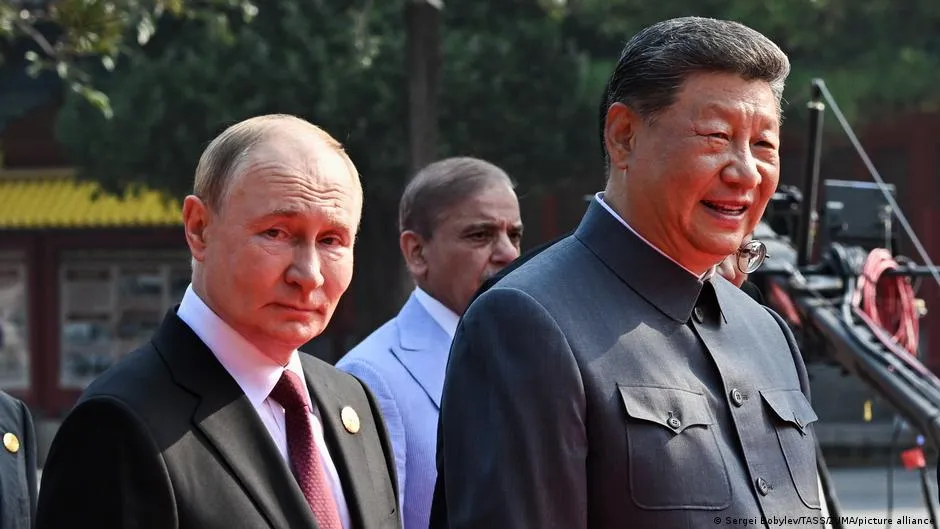
Vladimir Putin is heading to Beijing this week for a cozy sit-down with Xi Jinping - and if you think this is a meeting between equals, oh buddy, do we have a chart to show you. According to a DW analysis, China has quietly become the financial backbone of the Russian economy since Western sanctions kicked in following the 2022 invasion of Ukraine, and the numbers are frankly staggering.
From SWIFT to... Sinopec?
When Western nations booted Russia from the international financial system and cut off access to dollars and euros, Moscow had to pivot - fast. Enter China, stage right, ready with yuan-denominated trade deals, a hungry appetite for cheap Russian oil and gas, and absolutely zero moral qualms about the whole situation.
According to DW, China now accounts for a massive share of Russia's import market, filling the shelves with everything from microelectronics to cars that were previously sourced from Europe. Russian consumers who once drove German sedans are now behind the wheel of Chinese brands. The yuan has effectively replaced the dollar and euro as Russia's dominant foreign currency for trade settlements.
Oil for yuan, and yuan for everything else
The trade flow has become almost poetically lopsided. Russia pumps discounted oil and gas westward - well, eastward - into China. China sends back manufactured goods, electronics, and machinery. Russia gets to keep its wartime economy limping along. China gets deeply discounted energy. It is, as economists might say, a very one-sided friendship.
Western sanctions were designed to squeeze Russia economically and force a political reckoning. What they arguably achieved instead, per the DW report, was accelerating Russia's economic integration with China at a pace that would have taken decades under normal circumstances. Oops.
Who's really in charge here?
Here is the part that should make the Kremlin's communications team sweat. Russia, a country that spent decades projecting itself as a sovereign superpower, now finds itself structurally dependent on a single partner for trade, technology, and financial stability. That is not a partnership - that is a lifeline, and China holds the scissors.
Putin arriving in Beijing fresh off Trump's own visit there adds a layer of geopolitical absurdity that practically writes itself. Both leaders seeking favor with Xi in the same week suggests Beijing has become the undisputed center of gravity in global non-Western diplomacy.
Whether Xi views Putin as a strategic ally or an increasingly useful - and increasingly dependent - client state is the trillion-yuan question. Based on the economic architecture that has quietly snapped into place since 2022, the answer seems pretty clear.