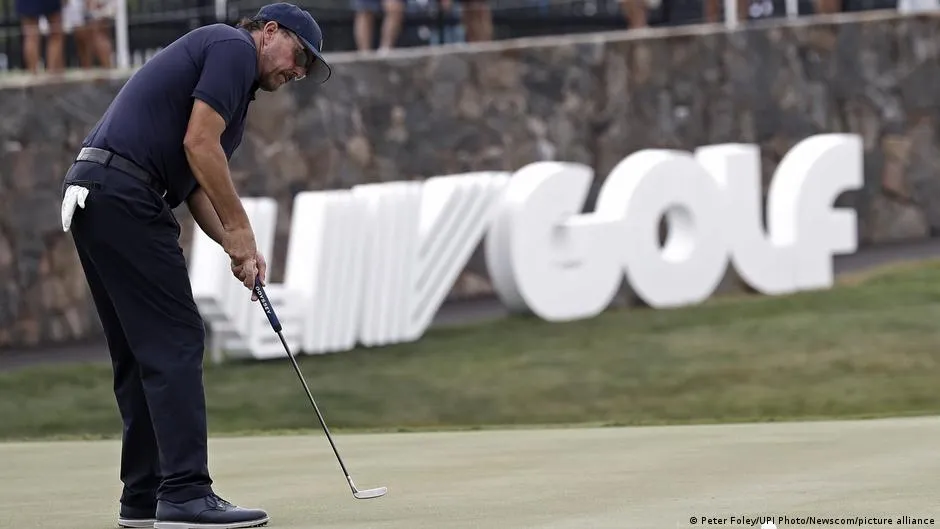
In what can only be described as the world's most expensive game of "sike," Saudi Arabia's Public Investment Fund (PIF) is reportedly withdrawing its financial backing from LIV Golf, the breakaway tour it bankrolled into existence just a few years ago, according to Deutsche Welle.
The fund, which essentially served as LIV's sugar daddy since the controversial tour launched in 2022 - luring big-name players away from the PGA Tour with eye-watering guaranteed contracts - is now citing "current macro dynamics" as the reason for pulling back. Which, translated from corporate-speak, roughly means: wars, oil market headaches, and a reminder that money is, in fact, not infinite.
The kingdom has bigger fish to fry
LIV Golf isn't the only project feeling the chill. According to DW's reporting, the Saudi investment pullback is part of a broader reassessment of spending priorities, with ongoing conflict in the Middle East and global economic turbulence reshaping where the kingdom wants to park its petrodollars.
The PIF had previously positioned LIV Golf as a soft-power masterstroke - a way to rehabilitate Saudi Arabia's global image through the surprisingly powerful medium of men hitting small white balls across manicured grass. Critics called it "sportswashing." Supporters called it "disrupting the golf industry." Everyone agreed the prize money was absolutely unhinged.
A tour built on hype, now searching for a business model
LIV Golf launched with a splash - stadium-style events, superstar signings like Phil Mickelson and Dustin Johnson, and a format designed to make traditional golf feel like watching paint dry. But despite the flashy presentation, the tour struggled to secure major broadcast deals and failed to win over significant chunks of the traditional golf audience.
The relationship between LIV and the PGA Tour has been a soap opera of feuds, lawsuits, a shocking proposed merger announcement in 2023, and then... not really a merger. The legal and political drama dragged on, and now it seems the kingdom may be quietly stepping back from the whole experiment.
So what happens to LIV now?
That remains the big question. Without PIF's backing, the tour faces an existential funding crisis. The guaranteed contracts that made it attractive to players were never going to be sustainable on ticket sales and streaming revenue alone - everyone knew the Saudi money was the actual product.
Whether LIV folds, pivots, finds new investors, or limps along remains to be seen. But for now, the tour that once threatened to permanently fracture professional golf is learning a hard lesson: disrupting an industry is easy when you have unlimited capital. It's considerably harder when the checkbook closes.