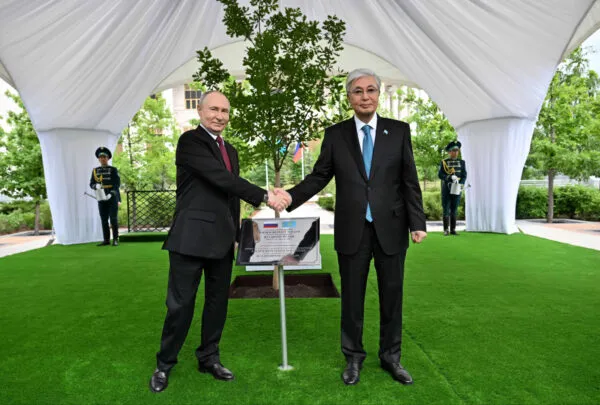
While most of the world was busy doom-scrolling, something genuinely consequential was quietly being scheduled: a high-level diplomatic dialogue between the United States and five Central Asian nations - Kazakhstan, Kyrgyzstan, Tajikistan, Turkmenistan, and Uzbekistan - focused squarely on critical minerals. The venue? The sidelines of the Astana Mining and Metallurgy Congress. The stakes? Potentially enormous.
Wait, what is the C5+1?
The C5+1 is a diplomatic framework linking the five Central Asian republics (the "C5") with a major external partner (the "+1"). In this case, that partner is the United States, which has been leaning into this format as a way to build influence and economic ties in a region historically dominated by Russia and increasingly courted by China. Think of it as Washington's polite but pointed way of saying: "Hey, we'd like to be relevant here, please."
Why critical minerals, and why now?
Central Asia is sitting on a staggering wealth of raw materials that the global clean energy transition desperately needs - think lithium, cobalt, rare earth elements, and more. As the race to secure supply chains for batteries, semiconductors, and green tech accelerates, the region has gone from geopolitical backwater to one of the hottest addresses in resource diplomacy.
According to reporting by The Diplomat, the upcoming C5+1 dialogue aims to deepen cooperation specifically around these critical minerals, using the Astana congress as a backdrop to move conversations from vague goodwill into something resembling actual coordination. The congress itself is one of the region's most prominent industry gatherings, making it a logical launchpad for this kind of initiative.
Who else is watching?
Everyone, basically. China has spent years cultivating deep infrastructure and trade ties across Central Asia through the Belt and Road Initiative. Russia retains legacy economic and security entanglements throughout the region. The European Union has also been pushing its own critical raw materials agenda. So the US showing up to the C5+1 table with minerals on the agenda is less a quiet meeting and more a geopolitical chess move in front of a packed audience.
What could actually come out of this?
That remains the big question. Diplomatic dialogues are famously good at producing joint statements and famously inconsistent at producing actual pipelines, processing facilities, or investment flows. But the direction of travel is clear: Washington wants a seat at the Central Asian resource table, the C5 nations want investment and leverage against their larger neighbors, and critical minerals are the language they're both willing to speak.
Whether this becomes a genuine strategic partnership or another entry in the long annals of "promising frameworks that went nowhere" is something we'll have to watch. Either way, the Astana congress just got a lot more interesting.